

- Status:
- Complete
- Farmed by:
- Rhodri and Claire Jones
- Location:
- Brynllech Uchaf, Bala
- Sector:
- Beef, Sheep
Overview
This project aims to investigate a common challenge within flocks, the "performance check" observed in lambs following weaning. We aim to determine if a strategic combination of mineral supplementation, guided by a comprehensive farm trace element audit, and reduced-stress weaning protocols can significantly improve daily live weight gains (DLWGs) and mitigate this post-weaning performance dip in Welsh mountain ram lambs.
The transition from milk to forage, coupled with separation from ewes, is a period of stress for lambs, often leading to reduced feed intake and subsequently, a slowdown in growth. Nutritional deficiencies, particularly in essential trace elements, can enhance these challenges. By proactively addressing potential mineral imbalances and minimising weaning-related stress, we will evaluate whether we can support robust lamb growth and health during this vulnerable phase.
Welsh mountain ram lambs will be randomly allocated into three groups, ensuring an even distribution of initial weights. All lambs will undergo a standardised, low-stress weaning process, which includes pre-weaning worming treatment (if required), early administration of mineral supplementation, and a gradual separation from ewes by moving them to their designated post-weaning pasture prior to the weaning date.
Each group will receive a different mineral supplementation strategy to compare efficacy. A control group will receive the farm's standard low-copper drench, a second control group with increased copper levels, and an experimental group receiving a bespoke "home recipe" drench. Lambs will be weighed at regular intervals to monitor DLWGs, and blood samples will be collected to assess systemic mineral levels.
The project will contribute to the Sustainable Land Management outcomes including:
- High animal health and welfare
- Resource efficiency
- Reduced GHG emissions
Latest Project Timeline
Final report
Key results:
- Cobalt efficacy: The home mix drench (administered every 3 weeks) successfully maintained vitamin B12 levels above the recommended threshold, whereas the proprietary drench (administered every 6 weeks) resulted in low levels.
- Weight gain: There was no difference in Daily Live Weight Gain (DLWG) between the three groups, with all groups averaging between 85 to 91 g per day over the trial period.
- Health issues: An outbreak of Tick-Borne Fever and several cases of fly strike significantly impacted growth rates across all groups, likely masking the potential physiological benefits of the mineral treatments.
- Iodine deficiency: Regardless of the drenching strategy used, iodine levels remained low in all groups, indicating that oral drenching is not an effective supplementation method for Iodine in this system.
- Effective maintenance: Both selenium and copper levels were maintained at the top end of recommended ranges across all treatment groups.
Background:
Brynllech has a history of trace element deficiencies, specifically manifesting as copper and selenium deficiency in cattle and poor fertility and growth in sheep. In the spring of 2025, a comprehensive mineral audit was conducted through Farming Connect. This audit assessed trace element supply from forage and supplements compared to stock requirements. The results highlighted significant imbalances, including high levels of some antagonists (potassium, sulphur, and molybdenum) which can lock up magnesium and copper, and absolute deficiencies of selenium, cobalt, and iodine. Consequently, a project was established to determine if a bespoke "home mix trace element drench” could outperform standard proprietary products in correcting these specific farm-level issues.
Purpose of the work:
- To compare the efficacy of a standard off-the-shelf mineral drench (administered every 6 weeks) against a bespoke home-mix drench (administered every 3 weeks) targeting specific farm deficiencies.
- To assess if adding copper oxide rods (Coparods) to the drenching protocol improved copper status in the presence of high sulphur and molybdenum antagonists.
- To monitor lamb performance (DLWG) and blood mineral profiles to identify the most cost-effective supplementation strategy for the farm.
What we did:
In July 2025, approximately 150 Welsh Mountain male lambs were randomly allocated into three treatment groups:
- Group 1 (Control): Standard commercial drench (low Cu) administered every 6 weeks.
- Group 2 (Control + Cu): Commercial drench (no Cu) administered every 6 weeks, plus 2g copper oxide rods once in July.
- Group 3 (Home mix): A custom drench (containing Co, Se and I) administered every 3 weeks, plus 2g copper oxide rods once in July. The home mix was made up in a laboratory environment with great care taken to avoid inhalation of the chemicals.
In theory the home mix provided more cobalt, selenium and iodine than the proprietary drenches.
Table 1. Amount of Cobalt, Selenium, Iodine and Copper supplied for each treatment group
| Cobalt | Selenium | Iodine | Copper | |||
| Control | Proprietary drench | Total mg/l | 3000 | 700 | 12000 | 5000 |
| 3.5 ml dose | mg/dose | 10.5 | 2.45 | 42 | 17.5 | |
| For 6 weeks | mg/day | 0.25 | 0.06 | 1.00 | 0.42 | |
| Control (no copper) plus coparods | mg/day | 0.25 | 0.06 | 1.00 | 9.5 | |
| Home mix plus coparods | Home mix drench | Total mg/ml | 1.39 | 0.353 | 3.06 | |
| 10.5 ml dose | 14.6 | 3.71 | 32.13 | - | ||
| 10.5ml dose/21 days | mg/day | 0.69 | 0.18 | 1.53 | 9.5 | |
| Coparods | 2 g bolus | |||||
| mg/day for 6 months | 9.5 |
Lambs were weighed regularly from 4 July to 5 November. Blood samples were taken after the first 6-week cycle to check trace element levels (selenium, copper, iodine, and vitamin B12). Clinical observations were recorded throughout to monitor health events, specifically tick activity.
Table 2. Results from analysis of blood samples taken from 6 lambs from each group
| Mean of 6 lambs | Control | Control + cu | Home mix + cu |
| Copper (9 – 19) umol/ml | 16.7 | 17.4 | 19.1 |
| Vit B12 (>221) pmol/l | 158 | 165 | 234 |
| Selenium (GSH-PX) (>50) U/mlRBC | 151 | 126 | 161 |
Iodine (ug/ml) >60 (pooled sample) | 28 | 31 | 29 |
Outcomes:
- Live weight gain:
Despite the differing treatments, average weight gains between July and November were disappointing:- Group 1 (Control): Average DLWG of ~91g/day.
- Group 2 (Control + cu): Average DLWG of ~85g/day.
- Group 3 (Home mix + cu): Average DLWG of ~87g/day.
Live weight gains were extremely variable across all groups – ranging from 17 to 204g/day over the whole trial period (111 days) probably reflecting the ongoing health issues early in the trial. DLWG was lowest in the first 49 days of the trial (75, 75 and 68 g/day respectively) but gains over the last 42 days had improved markedly to 132, 157 and 144 g/day, and over the last 19 days had improved in control and home mix groups again to 171 and 205 g/day respectively, possibly reflecting recovery from Tick Borne fever. Numbers of lambs weighed varied slightly by date as a few individuals occasionally missed being weighed.
Table 3. Lamb daily liveweight gain shown for 4 different periods; whole trial period, 14/7 - 17/7, 24/9 - 5/11 and 17/10 - 5/11
Whole trial period 111 days | DLWG range g/day | 14/7 17/7 to 24/9 49 days | 24/9 to 5/11 42 days | 17/10 to 5/11 19 days | |||||
No. lambs | DLWG g/day |
| No. lambs | DLWG g/day | No. lambs | DLWG g/day | No. lambs | DLWG g/day | |
| Control | 48 | 91 | 29 – 204 | 47 | 75 | 48 | 132 | 48 | 171 |
| Control + cu | 56 | 85 | 17 – 134 | 53 | 75 | 54 | 157 | 56 | 152 |
| Home mix +cu | 53 | 87 | 17 - 153 | 53 | 68 | 49 | 144 | 53 | 205 |
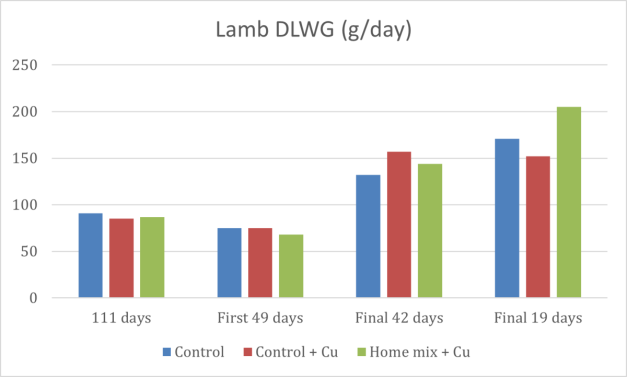
Figure 1. Shows how performance steadily improved over the course of the trial.
- Disease impact:
Performance was compromised by Tick Borne Fever (confirmed via blood testing in September) and fly strike. Several lambs suffered pyrexia and weight loss, necessitating veterinary intervention. This disease pressure acted as a limiting factor, effectively capping growth potential regardless of mineral status. - Blood mineral analysis:
- Cobalt (Vit B12): This was the major differentiator. The home mix group (3-week interval) showed adequate levels, while both control groups (6-week interval) were low. This confirms that on this holding, dosing intervals of 6 weeks are too long to maintain cobalt status.
- Iodine: All groups tested showed low levels. The oral drenches failed to alleviate iodine deficiency, suggesting alternative delivery methods are required.
- Selenium & copper: At high-normal levels in all groups, proving that both the copper rods and drench methods were effective for maintaining levels of these specific elements.
Return on Investment:
While the DLWGs were similar, the Return on Investment (ROI) analysis must consider labour versus long-term health. The home mix strategy required gathering sheep every 3 weeks—adding two additional handling occasions over the other two treatments. Total costs for the supplements were 27.5p, 40.21p and 29.1p/lamb respectively, but two extra handing episodes also need to be costed in for the home mix group. In the short term, based purely on weight gains from this trial, the extra labour cost was not recovered via kilogram output (potentially due to the Tick-Borne Fever).
However, the frequent weight monitoring meant health issues were identified earlier, potentially reducing further loss of performance and the blood data suggests that the home mix prevented sub-clinical cobalt deficiency (although further testing would have confirmed this). Over a longer timeline or in a year without high disease pressure, this improved mineral status would likely result in fewer "poor doers" and higher survival rates, justifying the increased labour input.
How to apply on your farm:
- Audit first: Do not buy off-the-shelf mineral supplements blind. Conduct a forage/mineral audit to see if you have specific trace element or mineral deficiencies or antagonists (like molybdenum locking up copper).
- Test don't guess: Use blood sampling to validate if your product is working. In this project, a 6-week treatment interval failed to maintain cobalt levels.
- Adjust frequency: If using oral drenches for cobalt, be prepared to drench every 3 weeks or preferably every 2 weeks. If labour availability makes this impossible, switch to boluses.
- Watch for health issues: If animals are not growing despite mineral supplements, look for "invisible" diseases. Here, Tick Borne Fever was the silent thief of performance.
- Rethink iodine: If Iodine is a specific issue on your farm, oral drenches may be ineffective. Consider iodine boluses or injectable iodised oil.