

16 April 2026
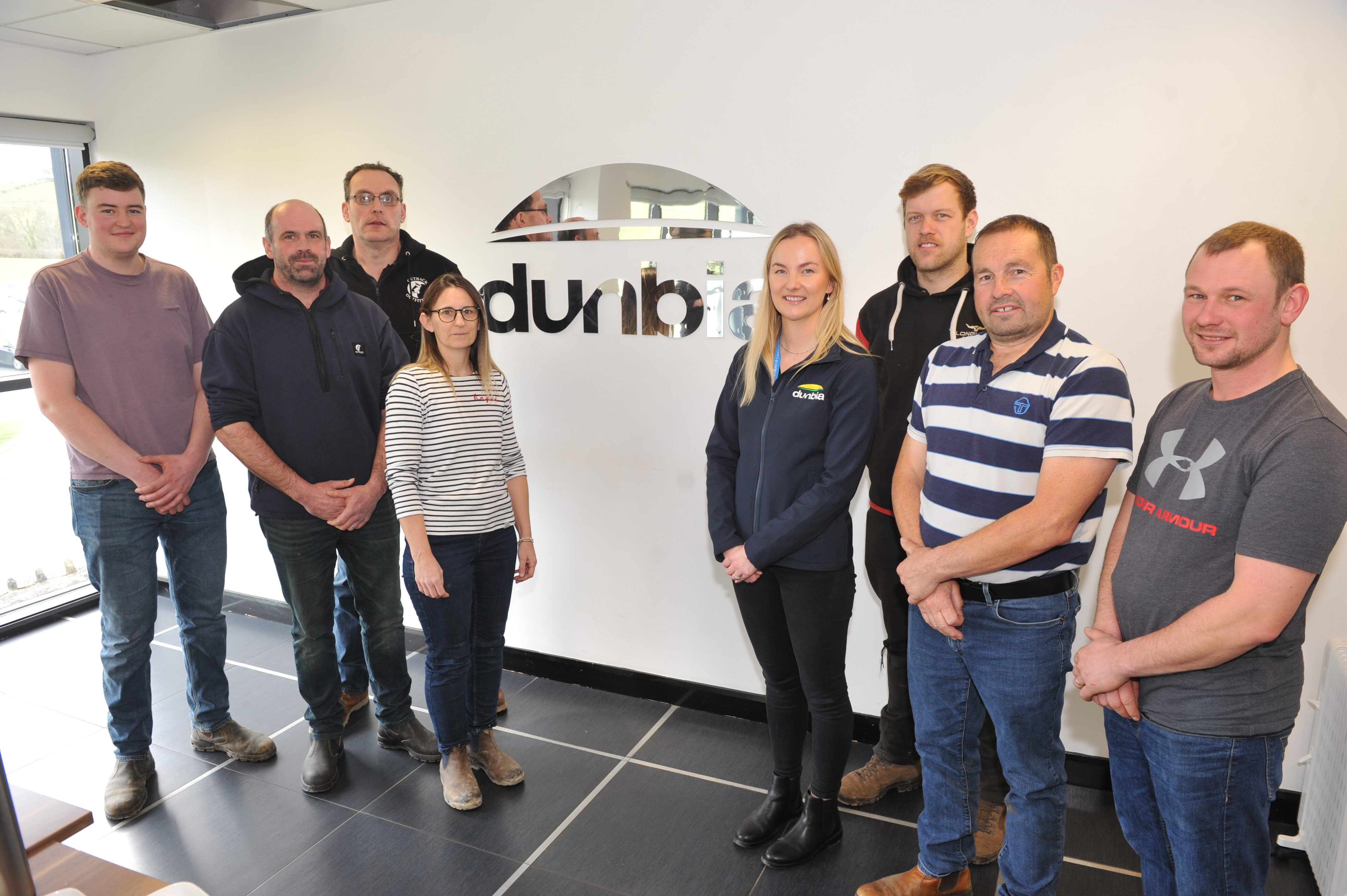
The farmers are all members of a Farming Connect discussion group where they are supported by independent sheep consultant, Lesley Stubbings, and lamb processor, Dunbia.
The discussion group meetings and the contact they have with one another in between those have not only been a springboard to improving performance but have also facilitated an opportunity to build long-term business relationships.
The progress they have made in lifting performance has been significant as data collated by Dunbia shows.
Since 2022, the group overall has achieved a 5.4% improvement in lambs hitting specification, with two farms lifting that gain over 9% in 2024/25 compared to 2022/2023.
“These farmers have been continuously improving over the last 15 years, but it shows that there’s always merit in looking to improve further,” says Leisia.
This demonstrates the value of the discussion group format in agriculture, says Leisia Tudor, agriculture manager at the Dunbia Group.
“For Dunbia, the consistent relationship the farmers have with Lesley over the last 15 years has seen marked improvements in their weights and grades, which directly links of an improvement in efficiency on farm,” says Leisia.
“There can often be a missing connection made between animal health, nutrition, that whole farm efficiency side of things, and farmers understanding how these have an impact on the return they get from the processor.
“This group demonstrates that if you improve your animal health, test your forage, and focus on overall flock efficiency, it has a positive impact on the returns received for their lambs.”
Farming Connect facilitates a number of sector-specific discussion groups across Wales, including dairy and beef too, but this sheep group is one of the longest running.
The model is shown to be highly effective at generating knowledge transfer.
Farmers exchange practical information, experience and ideas, receive advice from Lesley, and data and feedback from Dunbia.
The financial and physical performance of their sheep enterprise is also monitored, and as trust builds up among the members, there is a willingness to share that sensitive information.
Members are very open with each other, says Lesley. “One of the strengths of this group is that they know each other so well.
“At meetings, everyone shares what has gone well, what hasn’t, a farmer might think they have a major issue and be reluctant to share it but when they do, and realise that others have the same issue, it becomes more manageable for them, they feel less isolated.”
Discussion groups create competition too. “There is a very positive friendly competitive element when you have a group scenario,” Lesley points out.
There are several key areas the discussion group focusses on which have resulted in performance improvements, as Lesley explains.
Body condition scoring
When the group first formed, its members didn’t actively use body condition score (BCS) but it is now second nature to them, taken as a given.
They are aware they need to hit BCS targets, and that if they don’t, things won’t be as they should be.
Historically, one or two had bad experiences with liver fluke, and understand that it will knock them off course as far as BCS is concerned so we are using testing and monitoring to establish if and when to treat.
Many health issues in livestock farming come back to body condition, so when farmers know there is an issue that impacts on body condition, they are much more alive to doing something about it.
Analysing forage and adjusting feeding strategies
These farmers might have once made their forage, bought their concentrates, and fed the same amount year in year out without any knowledge of their forage quality.
Since we started analysing forages, they understand the potential value of good quality forage. In some cases, members are making extremely good silage; for example, in excess of 11.0MJME in 2025.
An analysis like this will require virtually no supplement to be fed, just a small amount of a very specific one.
On most of the farms, we have been able to improve results while reducing the quantity of supplement they feed quite dramatically, and at the same time, increasing its quality and matching the formulation more accurately to the forage available.
The farmers see first-hand the value of maximising forage and some have started making better quality silage, upped their game in how they make it and when they make it, because when they see another farmer only needing to feed a certain quantity of supplement compared to what they are, it does put up the value of it.
Improving animal health and using medicines only where appropriate
If we take liver fluke as an example, some were using treatments routinely without necessarily knowing if they had a problem.
By testing, they now use those interventions to maximum effect, at the right time, and for the right reasons.
They no longer just do so because it is what they have always done in the hope that it will work because they know that, particularly with parasites; that just doesn’t cut it.
They know that if they are unsure if they should be treating, they can pick up the phone to me at any time and check and having that backstop of somebody that they trust means they don’t just go for what they believe to be the safest option.
Using data to inform decisions
Data provided by Dunbia gives the farmers a good handle on their productivity.
That feedback, on what the carcasses look like, their marketing patterns, is extremely useful.
The farmers know what the gross margins of their flocks are, what their physical performance is, so when we talk about spending money on an abortion vaccine, for example, they can see the immediate benefit from it if it stops them losing potential in their lamb sales.
Lamb selection criteria
The farmers go into the abattoir in Llanybydder to see the carcasses and receive feedback, and data is fed back to them regarding how many of their lambs are hitting the target, how many aren’t, and, potentially, how much it is costing them.
We sometimes hear the industry complain that farmers are price takers, that they have to accept the price on the day, but this work shows it is not always the case – when a lamb producer is selling on a grid payment system and they have carcasses not making the grade, that is the reason their lambs are being devalued and why they are not getting paid what they had hoped for.
The discussion group members know they can’t afford to do that, that they have to hit the top grades with as high a percentage of their carcasses as they can.
PANEL
Value of discussion group membership
For Danny Jones, the discipline of submitting accurate costings ahead of each meeting, and comparing his figures to others in the group, has focussed his attention on cost of production.
This exercise gives a valuable insight into his business performance as, although his costs have increased, so too have margins.
“I probably wouldn’t be keeping such a close eye on costings if I wasn’t in the group,” admits Danny, who farms at Pantycelyn in the Cwm-ann area near Lampeter.
Another member, Peredur Owen, who’s involved in a share farming enterprise at Glanmynys near Llandovery, says having access to the professional expertise of a consultant helps him address issues in his system and work out solutions.
“We are very fortunate to have Lesley’s input. It drives us all to up our game, to get on top of performance.”
This has been achieved in multiple areas including animal health, according to Anwen Hughes, who has been a member of the group since its formation.
Benefits of benchmarking to your farm -
Benchmarking is a process of measuring and monitoring key aspects of your farming business to help identify opportunities for improvement and efficiency. It supports better decision-making and can help you track progress over time.
FARMDATA+ is a new bilingual benchmarking tool that uses a Key Performance Indicators (KPIs) to focus on physical and financial performance in specific areas of farm business.
Using FARMDATA+ will enable you to meet UA3: Benchmarking requirement of the Sustainable Farm Scheme. (KPI titles only are shared - no performance data)