

What to expect?
A classroom-based learning experience delivered on-farm.
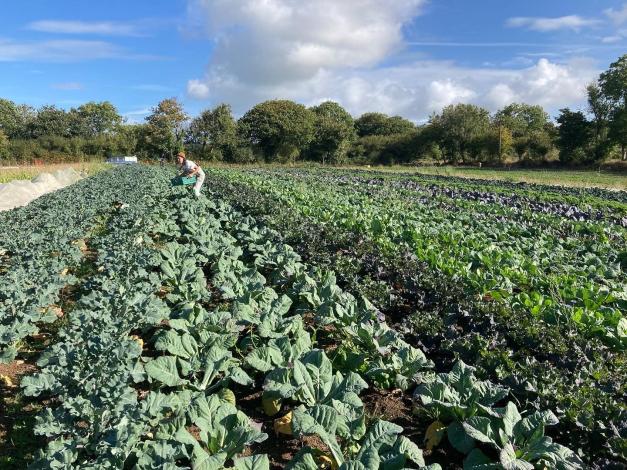
A guided farm tour to explore how crop planning decisions influence production, rotations, infrastructure, and enterprise management.
Interactive small-group and individual exercises designed to help you apply key concepts to your own growing business.
Opportunities to discuss challenges and share experiences with fellow growers in a supportive learning environment.
Who is this workshop for?
The workshop is suitable for both experienced growers and those at the early stages of developing a horticultural enterprise.
This masterclass builds on themes explored within the Horticulture Scale-Up Programme, offering a more in-depth focus on crop planning, production scheduling, profitability and business management. Previous participation in the Scale-Up Programme is beneficial but not essential, and the workshop is open to all growers and farmers interested in developing or expanding a horticulture enterprise.
- Commercial horticultural growers looking to improve the efficiency and profitability of their crop planning.
- New and developing growers seeking a structured approach to planning production and managing resources.
- Farmers considering diversification into horticultural production and wanting to understand the planning requirements for a successful enterprise.
- Market garden, vegetable, salad, herb and mixed-cropping producers looking to optimise rotations and production schedules.
What does the workshop include?
Day 1
- Understanding the foundations of effective crop planning for commercial horticultural enterprises.
- Planning crop rotations to support soil health and reduce pest and disease pressures.
- Exploring soil fertility management and nutrient requirements for different crops.
- Matching crops to available land, infrastructure, labour and business objectives.
- Developing a practical crop planning framework that can be adapted to your own enterprise.
Day 2
- Assessing market opportunities and using demand to inform crop selection and production targets.
- Planning production around customer requirements and sales channels.
- Assessing crop profitability and cost of production.
- Understanding production scheduling, succession planting and harvest planning.
- Evaluating crop costs, gross margins and profitability to support business decision-making.
- Developing practical approaches to crop planning and record-keeping.
- Using crop planning tools to create sowing, harvest and production schedules.
- Bringing rotations, sales forecasts and crop choices together into a written crop plan
- Developing a practical crop planning framework that can be adapted to your own enterprise.
Tutor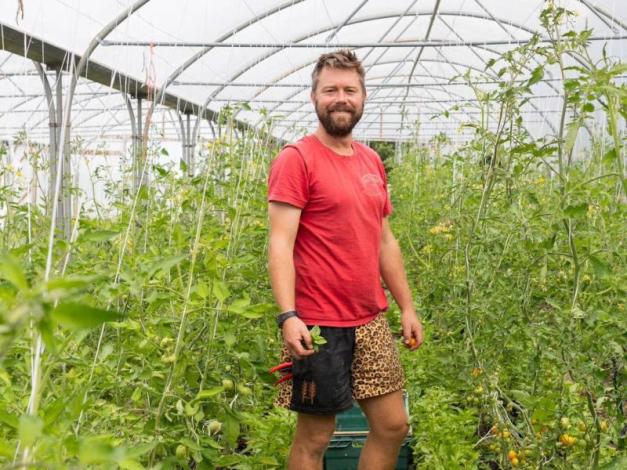
Adam Payne is co-founder of Awen Organics, a successful 25-acre organic vegetable farm in North Pembrokeshire. With over a decade of experience in commercial horticulture, crop planning, direct sales and wholesale production, Adam combines practical growing expertise with a strong understanding of the business principles needed to build a profitable and resilient horticultural enterprise.
Example Agenda
Day 1
9:30 – 10:00 Arrival and lunch
10:00 -10:30 - Welcome and intros
10:30 -11:30 Session 1 Developing a sustainable crop rotation
11:30 -11:45 Break
11:45 -12:15 Exercise and discussion and feedback
12:15 -13:15 Rotation Farm tour
13:15 – 14:00 Lunch
14:00 – 15:45 Session 3 What fertility do your crops need
15:45 -16:00 Closing
Day 2
9:30 – 10:00 arrival
10-10:30 Welcome and Introductions
10:30-11:30 Session 1 ‘What can you sell – what does your market want, and when?’
11:30 – 11:45 break
11:45 – 12:45 Session 2 – ‘What should you grow?’
12:45 – 13:30 lunch
13:30 – 14:30 Farm tour of tunnels looking at how we make decisions on using high value space over winter
14:30 – 15:45 Session 3 ‘Pulling it all together’
15:45 – 16:00 closing
Dates & locations
| Date | Location |
| 26 and 27 November 2026 | Awen Organics, Eithin Farm, Felindre Farchog, Crymych, SA41 3XW |