

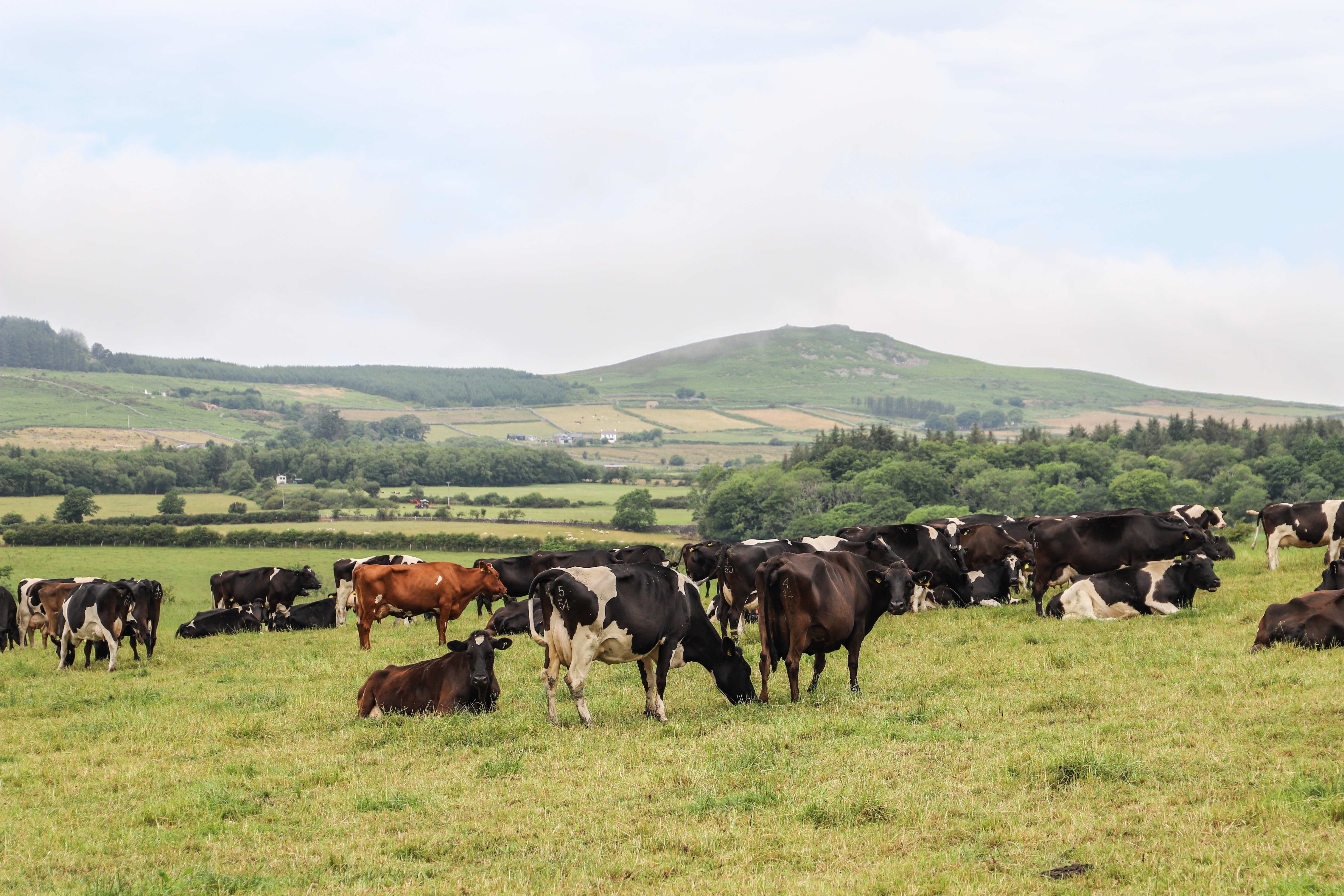
Investment made by a Welsh dairy farm in heat detection technology will be recouped within 2.3 years by cost savings on labour and sweeper bulls, a study has found.
Father and son Tomos and Ifan Ifans milk 400 autumn-calving cows at Tyddyn Cae near Pwllheli and recently established a second herd of 200 spring-calvers on a nearby holding.
That expansion has added pressure on labour at breeding as Ifan is solely responsible for observing heats - visual checks were time consuming and that pressure is set to increase with two herds to manage.
“The tie of checking two blocks would have been very tying, it would have been too much of a burden on my time,” says Ifan.
Cow fertility has been a key area of focus in recent years and that has resulted in the calving block reducing from 12 weeks to nine.
The Ifans family didn’t want that progress to slip and the opportunity to trial heat detection collars as part of their project work as a Farming Connect ‘Our Farms’ network farm allowed them to explore a potential solution.
In 2025, a base station and 400 SenseHub-Allflex cow collars were installed ahead of the autumn breeding season, a set-up that cost £40,868.
Every cow is fitted with a collar and her details and collar identification number uploaded to SenseHub software.
The information captured is sent at regular intervals throughout the day via antenna to the farm computer or smart phone - when peaks in activity and in dropped rumination are met this indicates a cow is bulling.
Heat detection is now as simple as checking the computer for alerts and holding back cows listed for checking and insemination, says Ifan.
“It tells us everything that is going on with the cows 24 hours a day.”
Technology made the system more efficient, he adds.
“I no longer need to monitor heat detection visually; the technology is doing the work for us and that frees up my time to get other work done.’’
The study calculated labour savings worth £3,675 during the breeding period, 147 hours costed at £25/hour for the pre-mating and mating periods.
The collars mean sweeper bulls are no longer needed as AI is now be used throughout the breeding period.
Until 2025, three Hereford bulls were purchased annually at a cost of about £2,500 a head, bringing the numbers kept as sweepers to eight.
Removing bulls from the system resulted in a £14,060 saving, which includes a maintenance cost of £2.25/day/head.
AI costs increased by £800 because an extra 100 semen straws were purchased at £8 each.
Another positive from having no bulls on the farm is that it creates a safer environment and reduced cattle handling, says Ifan.
“Bulls can be dangerous and difficult to handle and, by using AI beef bulls, calf quality will be better and we can select sires with the traits we want.”
Sweeper bulls are not ideal for an autumn block either, he adds.
“We found that when they were serving autumn calvers in the shed we would have trouble with foot health, with lameness, running bulls in a field is one thing but it is hard on them when they are on concrete.”
The Ifans family weren’t targeting fertility improvements as they already had a tight calving block and, although collars can contribute to improved fertility key performance indicators (KPIs) the study showed previous performance was more or less maintained.
In 2024, when visual checks were used for heat detection, the conception rate stood at 92% and in 2025 81%; after the collars were fitted in 2026 that rate was 84%.
Ifan has since switched the collars to the spring calvers. “It is a bit of a faff to swap them around, but we have done it for now to get us started, going forward we will probably get dedicated collars for the spring herd too because they are saving a fair bit of work and doing a good job.”
Osian Hughes, Farming Connect Dairy Officer for north Wales, who oversaw the trial, says the collars had been proven to simplify the breeding period.
“They have allowed labour to be more purposefully and efficiently employed which can also provide lifestyle benefits for a farmer in not having to carry out physical checks after normal work hours in an industry which already demands long working hours,” he notes.
Cow collar technology can potentially offer benefits over and above fertility - for cow health and welfare monitoring, record keeping and optimising cow performance and farm efficiency.
“While installation of the cow collars did not contribute to any apparent improvement in fertility KPIs at Tyddyn Cae, the savings in labour costs over the breeding period and the ability to use the cow collars instead of sweeper bulls at the tail end of breeding have meant that the cost of the collars will be covered in just over two years,” says Osian.
In Wales, farmers can get support from farm business advisors through the Farming Connect Advisory Service to assess the value of investing in this technology, he adds.
Considerations for using technology to support heat detection
Research the options and identify the best heat detection system for the farming system, Osian advises.
“The calculations from the trial at Tyddyn Cae may help farmers estimate how much of a cost saving might be relatable to their farming system.”
Heat detection technology may not suit every system.
“Consider if this investment is suitable for you, or if there are other possible investments on farm that may have a quicker payback,” Osian adds.
FARM FACTS
283ha farmed
New Zealand and Irish Friesian cows
Average cow bodyweight 525kg
90% submission rate in first three weeks
20/40 and 18/36 semi-rapid exit milking parlours
6,800 litres milk yield average/cow/year at 580kg solids
168,000 cells/ml average somatic cell count (SCC)
Milk sold to South Caernarfon Creameries
Cows at grass from February to November