

- Status:
- Complete
- Farmed by:
- Gerallt Jones
- Location:
- Graianfryn, Llanfachraeth
- Sector:
- Beef, Sheep
Latest Project Timeline
Final Update
Key results:
For every £1 spent, the farmer saved £2.42.
Up to 90% reduction in starling presence during laser operation, improving animal health with no noted E.coli incidence or salmonella
No harm detected to cattle, wildlife, or humans.
Early activation in September proved highly effective in reducing starling numbers
Background:
Graianfryn Farm has faced severe starling infestations for many years, impacting livestock health, human safety, and farm profitability. Starlings consume the energy rich fractions of livestock feed, with an average bird capable of eating around 1kg of feed every 30 days, contributing to substantial losses. Previous research on UK farms has shown that starlings consume up to 11.9t of feed in a single winter, intensifying the financial strain on farms.
Their faeces also pose risks of pathogens such as E. coli and salmonella. On average every year, there was typically 1 mortality and around 12 animals requiring treatment, along with noticeable drops in liveweight gain during recovery. In one particularly challenging year, an entire batch of 50 cattle were affected over a 4–6-week period, causing significant disruption to performance and output.
Although starlings are protected under the Wildlife and Countryside Act 1981, this project operated fully within the law by focusing solely on non‑lethal behavioural disruption. Class 3B laser technology does not harm the birds; instead, the moving green beam is perceived as a potential threat, prompting them to vacate the area without causing injury or stress. With traditional deterrents proving unsuitable, the project therefore explored this safe, legally compliant method to disrupt starling behaviour effectively.
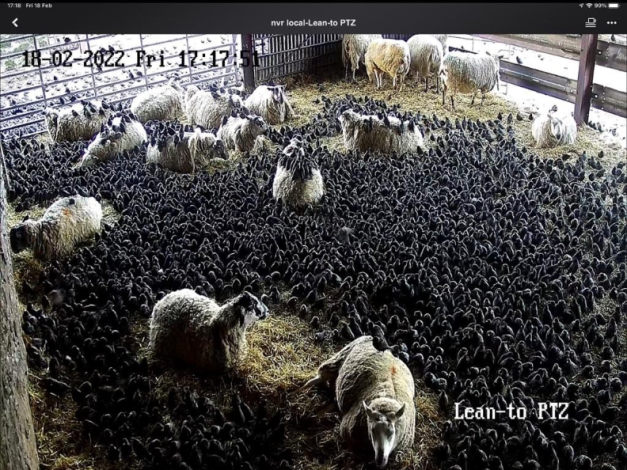
This image below showcases the degree of starling infestation at Graianfryn prior to the project taking place:
Purpose of the work:
To test whether rotating Class 3B laser technology can effectively deter starlings from cattle sheds to improve animal health and minimise feed losses.
Methodology:
The laser system was installed on 15 November 2024 in the main cattle shed, suspended above the feeding areas. It operated during daylight hours only, with pattern changes every 1–1.5 minutes to reduce the likelihood of habituation. Continuous CCTV monitoring, supported by still‑image comparisons, was used to evaluate starling activity before and after installation. This monitoring approach was necessary because starlings can travel up to 50 miles between roost and feeding sites and adapt quickly to static deterrents.
Several dynamic laser patterns were trialled to disrupt their selective feeding behaviour, as starlings are known to target high‑energy components of TMR, particularly starch and fat. Safety refinements formed a major part of the first year of work, including positioning units above livestock eye level and angling the beams downward to protect animal welfare.
A planned weighing assessment was postponed due to delays associated with system optimisation and refinement that took longer than anticipated and was due to this type of laser usage being new and it not being a off the shelve solution to the challenge.
Refinements/Considerations
- To minimise the risk of bird habituation, greater randomisation of laser behaviour is required—including variability in scan paths, dwell times, speeds, and cycle intervals—alongside adaptive, stochastic scheduling aligned to observed arrival windows.
- Investigate whether modest increases in projector output (and/or adjusted beam divergence to maintain safe irradiance at distance) can improve performance in brighter conditions and across wider spans. Any change must be contingent on a formal health and safety review (lockable key-switches, emergency stop, signage, defined exclusion zones, and staff training) and a documented risk assessment.
- All laser units in use are CE‑marked and classified as outdoor laser projectors; any future upgrades will meet CE/UKCA compliance and follow manufacturer installation guidance.
- It is also essential that farmers seek qualified technical expertise when planning, installing, or adjusting laser deterrent systems. Professional advice ensures that the equipment is fitted correctly, targeted effectively, and configured to maintain both legal compliance and on‑farm safety.
- Appropriate training for all staff members who may interact with or work near the laser system is important. Training should cover safe operation, emergency procedures, system checks, hazard awareness, and routine maintenance
Outcomes:
- Still photographs and CCTV footage demonstrate a significant decline in starling presence, consistent with previous evidence that visual disruption reduces feeding access.
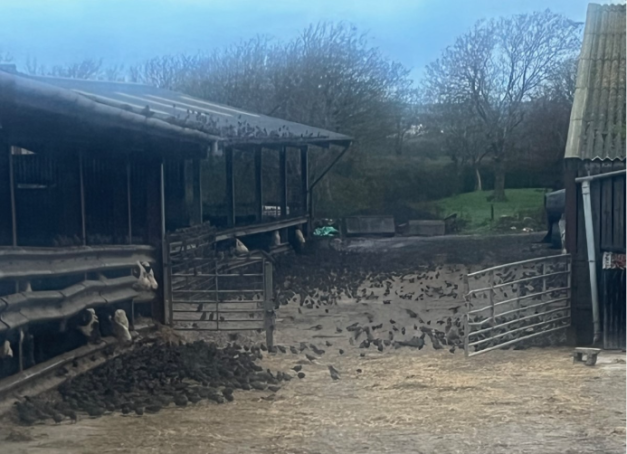
Still Photos of CCTV (2023)
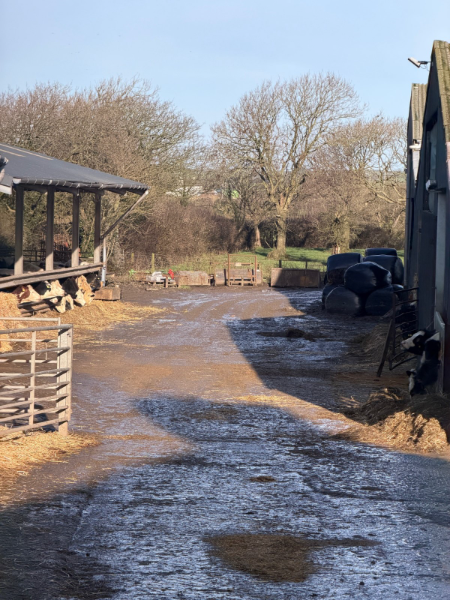
Still Photos of CCTV (2025)
- No visual evidence of harm was observed in starlings, cattle, or any other livestock.
- Ahead of winter 2025, the farmer independently installed two further laser units of similar type and power, providing coverage across almost all feed areas.
- However, due to the increase in laser presence after the additional units were installed, starlings would no longer enter the experimental area to consume the barley. This meant there was no opportunity to observe or measure their feeding behaviour, as the deterrent was so effective that it removed the conditions needed to record further feed loss.
Return on Investment
- The laser system reduced Starling numbers by 90%, significantly reducing feed losses.
- The laser installation cost £2,000 including fitting, with an estimated running cost of £0.86 per day.
- Prior to laser installation, starlings consumed approximately £60 worth of barley and maize distillers per day in the fattening shed.
- ROI: For every £1 spent, the farmer saved £2.42 (based on a 120-day housing period)
- The farmer reported that the reduction in starling activity made the investment in additional laser deterrents highly worthwhile.
How to apply on your farm:
1. Seek qualified technical expertise for planning and installing laser
2. Assess high-pressure areas where starlings commonly feed or roost.
3. Install a rotating laser device at height with unobstructed coverage.
4. Ensure safety interlocks deactivate the laser when staff enter.
5. Use varied light patterns to prevent starling habituation.
6. Monitor performance with CCTV and adjust programming when needed.