

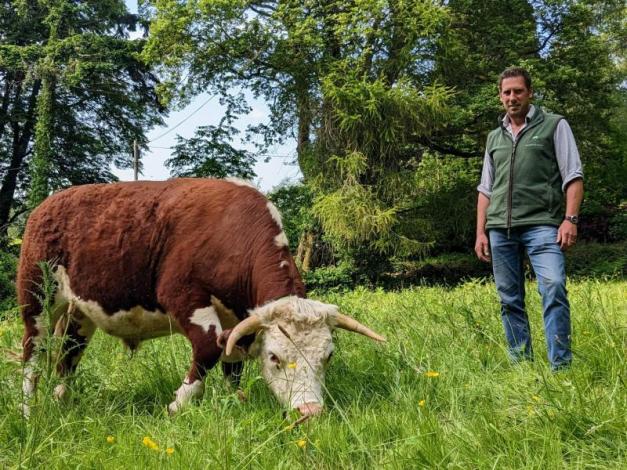
| Farm type: | Conservation grazing service – native hardy cattle, sheep and goats managing habitats for nature |
| Working hours: | 9am - 5pm, one to two days per week, with some weekend livestock checks on a rota |
| Location: | Based at Court Farm, Dingestow, Monmouthshire, with daily travel to grazing sites across Monmouthshire, the Forest of Dean, Herefordshire and Gloucestershire |
| Salary: | £12.71 / hour (or equivalent National Living Wage for age) |
| Contract: | 12 week work placement (one or two days a week) |
| Start date: | Late March 2027 |
| Accommodation: | No |
| Driving: | Full UK driving licence essential |
Job description
This is an exciting placement for a new entrant who wants to see a different side of farming: using livestock as a tool to restore and manage wildlife habitats. You will work hands-on with our cattle, sheep and goats across a wide range of sites, from peat bogs and ancient woodland to arboretums and wildflower meadows and learn how modern technology lets us graze places that conventional farming cannot reach.
This is a predominantly out-door based job, often in difficult terrain, in all weathers. The role will include some manual handling.
This would suit someone with a genuine interest in livestock, ecology and technology, who enjoys being outdoors in all weathers and wants a placement where no two days are the same.
About Grazing Management Ltd
Grazing Management Ltd (GML) is a conservation grazing business based at Court Farm on the Old-Lands estate near Dingestow, Monmouthshire. We provide grazing as a professional service: we bring our own native, hardy livestock – Belted Galloway and Welsh Black cattle, Shetland x Castlemilk Moorit sheep, and Bagot and Old English goats – to sites where landowners and conservation bodies need vegetation managed for wildlife. Our work includes a four-year project on Cleddon Bog SSSI, a lowland peat bog where our cattle are knocking back Molinia so that Sphagnum moss can recover; contracts with the Woodland Trust at Little Doward and with Forestry England at Westonbirt Arboretum; meadow restoration with Monmouthshire Meadows Group; and goat grazing on a number of ancient monuments to protect the structures from being overgrown with vegetation. Alongside grazing, we harvest native wildflower seed and provide consultancy and Lantra training.
What sets GML apart is the combination of traditional stockmanship with technology and evidence. Our livestock are managed on Nofence and Monil GPS virtual-fencing collars, which allow us to graze sensitive, unfenced and publicly accessible sites precisely and safely. We use 4G remote cameras, drones and have trialled LoRaWAN bolus sensors with Pasture for Life. We work alongside professional ecologists who monitor the effect of our grazing, so management decisions are guided by what is happening on the ground. GML’s approach is informed by Alex’s Nuffield Farming Scholarship, Grazing as a Service: Hooves, Habitats and Hard Economics, which examines how conservation grazing can operate as a credible, commercially sustainable service.
Your managers
You will work directly with GML’s directors, Alex and Emily Crawley, who founded the business together. Alex came to farming as a new entrant with no family agricultural background. He is a Nuffield Farming Scholar and is passionate about showing that conservation grazing can be both good for nature and a viable business. Emily's background is in environmental education and leads on training, monitoring and animal health and welfare.
Expect to be encouraged to ask questions, try new approaches and see how a growing rural business is run.
Farm facts
- Native hardy breeds: Belted Galloway and Welsh Black cattle, Shetland x Castlemilk Moorit sheep, Bagot and Old English goats
- Livestock managed on Nofence virtual-fencing collars
- Multiple grazing sites across Wales and England, including an SSSI peatland, ancient woodland and a national arboretum
- Partners and clients include the Woodland Trust, Forestry England and Cadw
- Native wildflower seed harvesting and meadow creation
- Education and outreach with schools and youth groups
Your role
On this placement, your roles and responsibilities will include:
- Daily livestock checks across our sites, ensuring animal welfare is your top priority
- Handling, moving and loading cattle, sheep and goats
- Setting up and managing virtual fences using the Nofence app, and monitoring collars and livestock data
- Supporting ecological monitoring and learning how grazing affects habitats
- Talking with walkers, visitors and site users about the animals and why they are there
- Joining meetings with farmers, landowners, ecologists and government bodies
- Practical site work: water supplies, handling pens, fencing, seed harvesting and general maintenance
- Keeping accurate records of stock movements, health and site observations
It is essential that you:
- Have an interest in livestock – cattle, sheep and goats
- Have an interest in ecology and the natural environment
- Have an interest in technology and how it can be used in farming
- Are good at working with the public
- Are open-minded and willing to try different approaches
- Can drive, with a full UK driving licence
- Work well as part of a team
- When faced with a new problem, will research solutions but also know when to ask for help
- Are happy working outdoors in all weathers
It would be desirable if you:
- Have some experience handling livestock
- Have a first aid certificate
- Can reverse a trailer
The benefits
- Hands-on experience with native-breed cattle, sheep and goats
- Practical experience of livestock technology, including virtual fencing and remote monitoring
- A broad range of sites and challenges – no two days the same
- Regular meetings with the directors to gain insight into how the business is run
- The chance to work with farmers, ecologists and government bodies
If you want to build a career where livestock farming and nature recovery go hand in hand, this is the opportunity for you.