

- Status:
- Complete
- Farmed by:
- Dylan, Gwenda and Gwion Roberts
- Location:
- Gornwal Ucha, Gwytherin
- Sector:
- Beef, Sheep
Overview
With very poor fertility conception rates in the heifers and half the cows in the suckler beef enterprise in 2023, Cornwal Uchaf has decided to investigate this issue further to identify any hidden health problems.
The suckler herd is split into two mobs during the summer at Cornwal Uchaf with half the herd and all the heifers running with the youngest bull and the other mob running with another older bull.
All 9 heifers and 50% of the cows were empty after 12-15 weeks. Dylan and Gwion have decided rather than selling these heifers as store cattle, they will make the most of what they already have on farm and get these heifers in calf through synchronisation and Artificial Insemination, and hopefully get them to realign with the herds calving for the following seasons. Even though he has been successful in other seasons on the farm, due to this poor conception result and disappointing progeny for the farmers liking the young Bull will be sold.
The project will work closely with the farm’s local vet to identify if there are any potential issues with the heifers which affect them conceiving. Blood samples will be taken from the heifers as a starting point and then correct any metabolic issues. The vet will create a plan for synchronising to stimulate ovulation and then all the heifers will be inseminated with DIY AI on specific day/s following synchronisation with an easy calving Limousin bull semen.
Through driving further improvement in efficiency in this part of the system, the project will also contribute to the Sustainable Land Management outcomes including:
- reduce the farms greenhouse gas emissions
- support improvement in maximising carbon storage and sequestration whilst reducing the whole-farm carbon footprint
- contribute to high health and welfare
Latest project timeline
Final update
Key results
- Key insight: 33% of heifers scanned empty despite meeting physical targets.
- Pelvic measuring: Pelvic measuring ensures retained heifers were a minimum of 100cm² by 12 months of age. Heifers within this herd ranged between 116cm² to 166cm².
- ROI: Removing 12 non-productive animals saves approximately £3,120 in overwintering costs (AHDB estimated costs at £260–£300/head).
Background
Cornwal Uchaf is a commercial beef and sheep hill farm operated by the Roberts family. The farm runs a low-input system, with the suckler herd grazing the highest points of the farm to reserve lower ground for sheep and silage. In 2025, the farm continued its work to increase beef herd efficiency. The project specifically targeted the optimisation of heifer selection and disease screening. By implementing rigorous pre-breeding checks and data-driven management, the project aimed to improve long-term herd fertility and reduce the retention of inefficient breeding stock.
Purpose of the work
- Optimise heifer selection: To implement strict data-driven criteria—specifically weight targets and pelvic area measurements (aiming for >100cm² at 12 months) —to ensure only physically suitable heifers are bred.
- Disease screening: To ensure that no disease is impacting on herd performance and fertility.
- Improve herd fertility: To utilise early scanning to rapidly identify and cull infertile or empty stock, ensuring a compact calving block and a younger, more efficient herd.
What we did:
On 24 April, the project selected 11 potential replacement heifers from the 2024 calf crop. Each heifer was weighed to ensure they met the critical target of at least 60% of its mature weight. The farms vet performed pelvic measurements to estimate pelvic area, strictly requiring a minimum area of 100cm² (at 12 months) for the animal to be deemed suitable for breeding. Following this selection process, a bull was introduced to the herd on 10 June, for a strictly defined 12-week period. Finally, on 23 September the entire herd underwent ultrasound scanning to confirm pregnancy status.
Outcomes:
The pre-breeding physical assessments were highly successful, with 100% of the 11 selected heifers meeting the required weight and pelvic area targets (ranging from 116cm² to 166cm²).
However, the whole herd scanning data revealed critical insights that physical measurements alone could not predict:
- Herd efficiency: The total herd scan revealed a 19.6% empty rate (12 out of 61 animals).
- Heifer performance: The data showed a disproportionate failure rate in the younger stock.
Of the 12 empty animals, 10 were heifers. Consequently, 33% of the heifers scanned empty despite looking physically perfect for breeding.
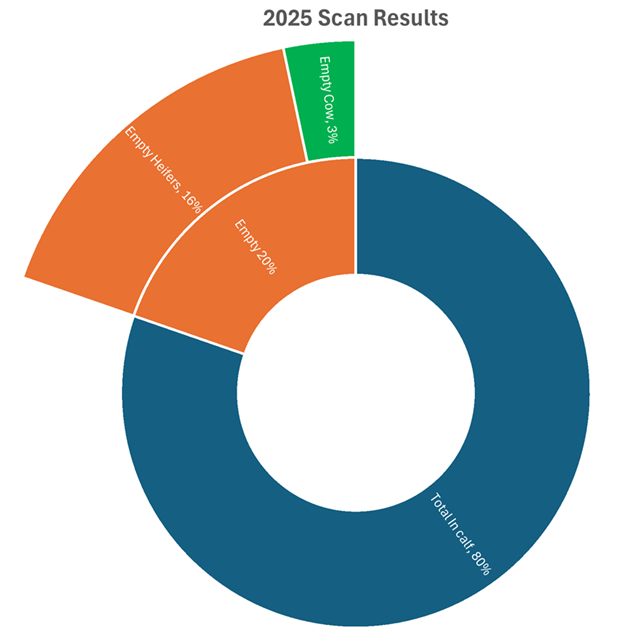
Figure 1: Herd scanning results for 2025
Moving forward, the vet recommends continuing with proactive herd management to improve efficiency and fertility. Key actions include:
- Continue pelvic measuring and trace element sampling to ensure heifers are physically suitable for breeding and nutritionally balanced.
- Maintain disease screening protocols and tighten the calving block by limiting bull exposure to 12 weeks, reducing late calvers.
- Focus on retaining replacements from cows that calve early within the block, as these animals are more likely to be fertile and productive long-term.
How to apply on your farm
- Target weights: Weigh heifers pre-breeding to ensure they are at least 60% of mature weight.
- Pelvic measure: Vet check heifers for a pelvic area of >100cm² (at 12 months) to reduce calving issues.
- Strict breeding block: Limit the bull to a 12-week period to prevent calf drift and ensure a tight calving pattern.
- Scan immediately: Scan cows and heifers as soon as possible after the bull is removed to identify empty stock.
- Remove empty stock: Immediately cull empty heifers or those with poor pelvic data to save winter feed costs.
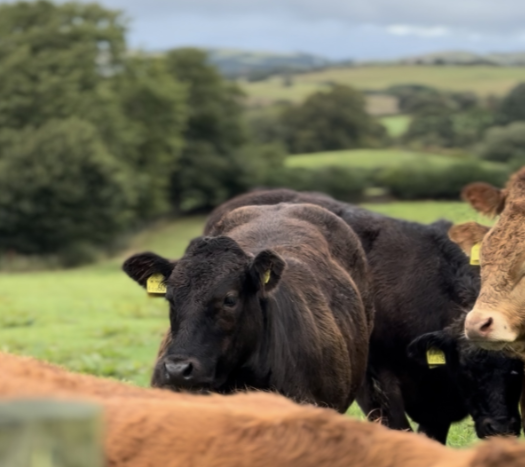
Figure 2. Heifers at Cornwal Uchaf