

Liver fluke control on farm – Test don’t guess.
Phillipa Page BVSc Bsc MRCVS Flock Health Ltd
Key results:
- 90% of the farmers in the project used the lateral flow test and risk assessment of their farm BEFORE deciding to treat for fluke infection – this led to targeted treatment of liver fluke and resulted in NO pre tupping fluke treatments being required.
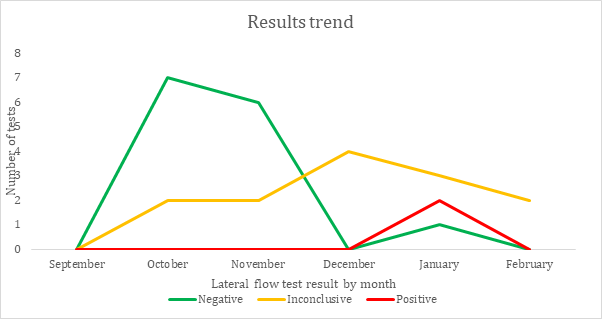
- Evidence of fluke infection started in December 2025. Most farms were still inconclusive or negative until late January, leading to a reduced number of treatments, or no treatments for fluke up until January 2026.
- 90% of the farms involved in the project will use the lateral flow test alongside this knowledge for future fluke control on their farm.
Background:
Many farms routinely use a flukicide from early Autumn as part of their flock health management to prevent liver fluke infection, which can cause mortality and losses in production. The liver fluke life cycle depends upon the presence of an intermediate host (mud snail), a suitable habitat of moisture and mud and optimum conditions in summer (wet and warm) to allow the liver fluke to multiply and infect the pasture. Therefore, each year is different from a risk perspective. The lateral flow test (Norbrook) has been developed to be used by farmers on farm to determine the fluke risk and the need for treatment, to reduce unnecessary treatments and improve treatment timings and accuracy.
Purpose of the work:
- To improve the knowledge of the farm specific risks of liver fluke for each project farmer.
- To demonstrate the benefits of a ‘test don’t guess’ principle by using a novel on farm test, the lateral flow test, to determine when exposure to liver fluke has occurred.
- To target the use of a flukicide treatment, to improve the benefits of that treatment and reduce the costs associated with unnecessary treatments and protect sheep against liver fluke infection.
What we did:
Fifteen farmers completed a pre-project survey to establish their current experience, knowledge of risk areas and control of liver fluke on their farms. They also supplied a map of their farm with the perceived risk areas identified.
They then attended a webinar by Phillipa Page to discuss the project, the lateral flow test (using blood from a pin prick of the ear) and how to use it. Dr Rhys Jones of Aberystwyth University then discussed the liver fluke parasite, lifecycle and a virtual farm walk to highlight the specific habitats favourable to liver fluke. Following this the project farmers were encouraged to reassess their farm risk areas and then start using the lateral flow test on a sentinel group of 10 homebred ewe lambs of stores. They were encouraged to use the test BEFORE any treatments and discuss the results on the WhatsApp group with Phillipa Page to determine a treatment or retesting.
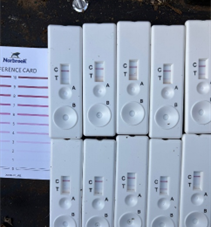
Figure 1: Lateral flow test results examples
Outcomes:
In the pre-project survey, 86% of farmers reported that they were unsure of the fluke risk to their farm and wanted to improve their knowledge of how to control fluke. 80% of farmers would treat for fluke in Autumn/Winter every year and 33% of farmers would always give a pre-tupping fluke treatment.
Following the project, there were no pre-tupping fluke treatments given and testing was used to target any required treatments through the season. The very dry conditions over 2025 and the improved knowledge of their farm specific risk areas, gave confidence to not give this treatment.
Thirty-two tests had been used to February 2026 (see figure 2) and 60% of the farmers gave their first treatments for fluke (see Figure 3) in late December into January following the tests showing inconclusive or positive results (see figure 4). 40% of the project farmers had not given a first treatment for fluke from winter 2025 to January 2026.
Figure 2
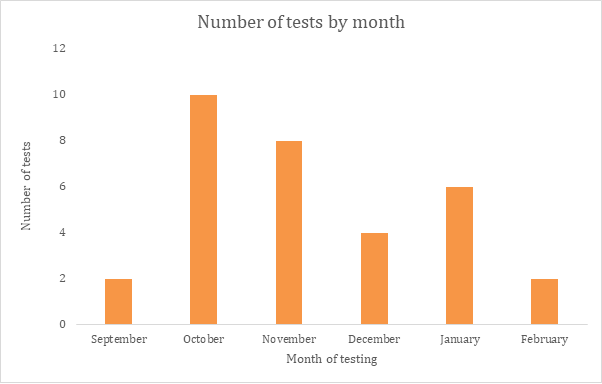
Figure 3
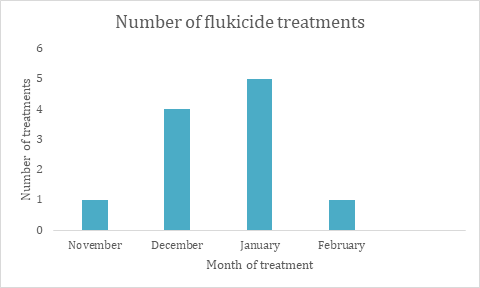
Figure 4
How to apply on your farm:
1. Draw a map of your farm and identify the high-risk fluke areas (clay soils, wet all year round, presence of mud snail).
2. Reconsider your routine fluke treatments. Do you need to treat? Is it a wasted and therefore costly treatment? Are you treating at the correct time with the correct product?
3. Discuss with your vet on how to use the lateral flow test to aid on farm decision making about the need to treat and what product to use.
4. Discuss with your vet how to control fluke, specific to your farm as part of your flock health plan. This will help avoid production losses, evaluate risk and target treatment.
5. Attend any training events with reference to liver fluke and other parasites to improve knowledge of how it applies to your farm, as each farm has different risks.
Please contact timtechnegolcff@mentera.cymru if you would like to receive a copy of the full final report for this project.