

Project summary
The Resilient Rotations project brought farmers together through a series of five specialist workshops and accompanying field trials designed to strengthen the resilience of farm businesses across soil health, nutrient management, grassland performance, crop decision-making, and public reputation. Across the whole programme, eighty attendees participated, representing fifty-eight businesses, demonstrating strong sector engagement and interest in developing more adaptable and sustainable farming systems. Sessions were delivered by leading industry experts including the Farm Carbon Toolkit, Dan Smith, Chris Duller, John Sarup, and Amy Jackson. Each provided practical tools, up-to-date evidence, and actionable strategies for improving resilience on farm.
The project also incorporated Wonder Wheel field demonstrations, which showed measurable improvements in infiltration, soil structure, and erosion reduction, reinforcing the value of low-disturbance soil management technologies. Overall, the project highlighted the importance of integrating soil and nutrient data, refining rotations, improving communication practices, and embracing innovation to support long-term productivity and environmental performance within farming businesses.
Wonder Wheel trials
The Wonder Wheel is a rotary spiked wheel system (Figure 1). It has spiked or notched wheels that penetrate the soil surface (usually 5–15 cm deep). As the Wonder Wheel is pulled by the tractor, it creates vertical fissures or pores in compacted soil layers. These fissures improve infiltration, aeration, and root penetration, helping soil biology recover after heavy machinery traffic or rainfall events. Each spiked wheel presses into the soil and lifts it slightly, cracking compacted zones (Figure 2). Unlike ploughing or subsoiling, it does not invert the soil, so residue and structure remain intact. It is especially useful on tramlines, headlands, or high-traffic zones where compaction limits drainage and crop health. The Wonder Wheel’s main use is to relieve surface compaction from tractors or sprayers, improve infiltration rates, enhance root growth and biological activity, and reduce surface runoff and erosion.
What we did
- Two sloping farm sites growing potatoes
- Wonder Wheel pass treated and untreated plots
- VESS (Visual Examination of Soil Structure) scoring
- Earthworm counts
- Water Infiltration Test
- Silt or sediment trap monitoring at bottom of slope
Results
Site 1
- Treated plots showed notably better soil structure (lower VESS) and faster water infiltration compared to untreated plots
- Untreated plots exhibited higher compaction and surface runoff, particularly after the rain in September
Site 2
- Treated plots tended to exhibit improved infiltration rates and moderate VESS scores
- No earthworms were observed in any plots, potentially due to the tramline sampling in a previously cultivated potato field
The Wonder Wheel field trials showed clear improvements in soil structure, infiltration, and runoff reduction across both test sites. Treated plots consistently achieved lower VESS scores, faster water absorption, and little to no silt loss, demonstrating relief of surface compaction and better hydraulic function. While earthworms were absent, this was likely the result of tramline sampling where anaerobic conditions may deter worm activity.
Conclusions
The findings indicate that the Wonder Wheel enhances aeration, pore space, and surface stability without disturbing soil layers. Hydrological function is improved, retaining and diverting rainfall into the crop rows rather than forming surface runoff between rows. Overall, the Wonder Wheel is an effective low-disturbance tool that supports soil health, reduces erosion risk, and contributes to more resilient crop rotations.
Long-term adoption of the Wonder Wheel could:
- Reduce dependence on intensive tillage, lowering fuel and labour costs
- Support sustainable water management, especially in high-rainfall seasons
- Contribute to soil carbon retention by minimising disturbance and improving aggregate stability
- Enhance compliance with soil health and water protection regulations, supporting environmental stewardship objectives
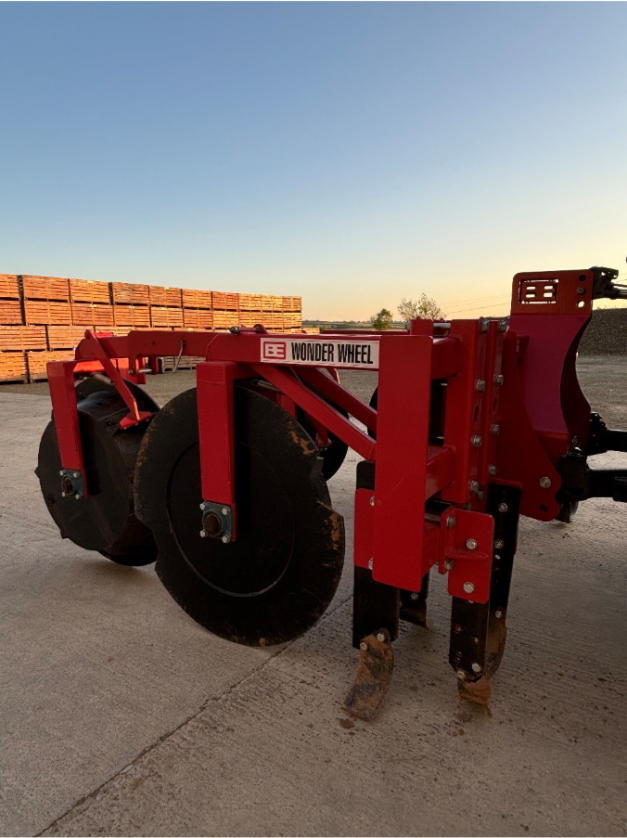
Figure 1: Wonder Wheel
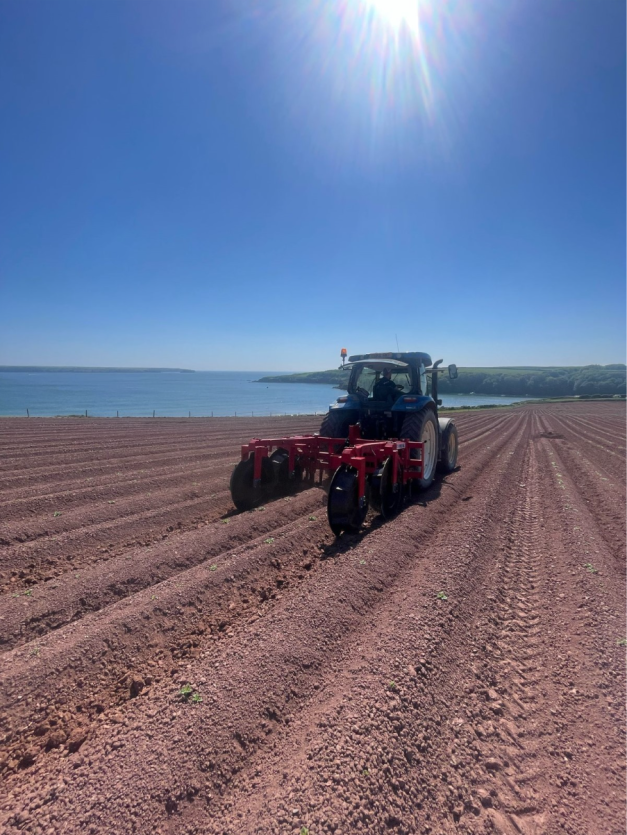
Figure 2: Wonder Wheel lifting soil and cracking compaction in tramlines