

Skills and Training
The skills funding application window is now open.
If you have any queries, please contact the service centre on 03456 000813.
Farming Connect skills and training will help you:
- acquire the key skills and competencies you need
- meet your personal, business and technical objectives
All training is fully funded or subsidised by up to 80%.
Each year, you can choose up to three training courses with Farming Connect, starting from 1st April.
Individuals can only access funding for one machinery and equipment course a year, and only one rodent control and one pesticides course per business.
Courses fall into four areas, each with their own funding rate -
- Business 80% funded
- Land 80% funded
- Livestock 80% funded, except rodent courses (40%)
- Machinery & Equipment 40% funded
For the time being, applications for training courses can be completed on BOSS. Click here to Log in to BOSS via Sign on Cymru.
Important update for BOSS users
Please note that any learning undertaken on BOSS from 1st April 2026 will only be applicable to UA4 of the Sustainable Farming Scheme (SFS) if you have registered with Farming Connect through RPW Online.
If you have not yet re-registered, you must do so via RPW Online to ensure your learning is recorded for SFS purposes.
Guidance on how to register with Farming Connect is available here: Re-register with Farming Connect and move to GOV.UK One Login | Farming Connect
In this section
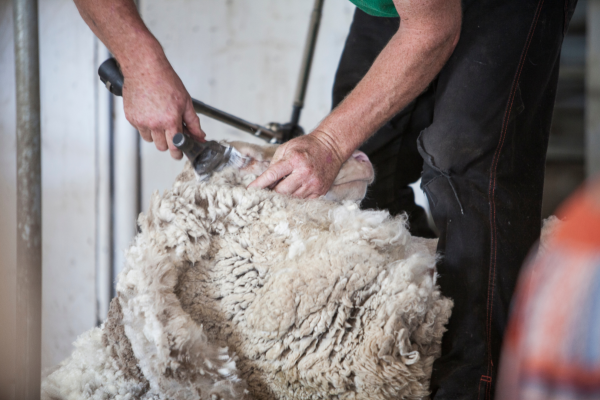




Off to a flying start with a helping hand from Farming Connect
After completing ‘Business planning and development’ and ‘Marketing your business’ training courses, Steve had the confidence to launch his new online and delivery-based business, Pembrokeshire Lamb, and he’s now selling boxes of his quality ‘gate to plate’ lamb, hogget and mutton directly to customers.