

Evaluating the growing of a bi-crop of peas and beans to replace bought in protein for feeding to beef cattle
Key results
- Nine tonnes of peas and beans were harvested at a total cost of £439.68/tonne; bearing in mind this was an exceptionally bad year given the poor weather resulting in late planting and harvesting. Had this been a typical year with a projected yield of 30 tonnes we would have seen a cost of £129.19/tonne.
- Over the 6 week feeding period, the home grown peas and beans saved on the cost of purchase of 1.9 tonnes of protein concentrate amounting to £643 in total cost; over a 6 month winter feeding period, this would have amounted to a cost saving of £2572.
- Due to the late planting, harvesting and poor weather conditions, the trial on this occasion did not show a positive return on investment however, previous peas & beans on-farm trials show different results with a positive return on investment.
Background
One of Robert Lyon’s main drivers at Lower House Farm is to improve farm resilience while reducing the farm’s carbon footprint. To work towards self-sufficiency in protein, Lower House Farm trialled incorporating bought-in peas and beans in the pregnant ewe ration for winter 2023/24 and planned to grow and use home-grown crimped peas and beans for the beef cattle in winter 2024/25.
Peas and beans can be used in ruminant diets as a useful source of energy and rumen degradable protein. Peas contain around 26% protein in the dry matter and beans around 26%. They are both high in energy, containing 13.6 MJ/kgDM with over 40% starch.
Purpose of the work
- To grow a bi-crop of peas and beans on farm and harvest followed by crimping and storing in a clamp
- To analyse the crop and formulate a ration for the beef animals based solely on home-grown feeds- crimped barley and peas and beans
- To produce a cost of production per tonne for the peas and beans (seed, growing costs, harvesting costs and crimping/preservation costs)
What we did
In early June 2024 a field was ploughed for the sowing of the peas and beans, which was much later than the suggested sowing time of April due to the very wet spring. The original field had to be changed due to the farm's operational issues, and the new field was flat at the bottom rising to a slightly steeper section at the top of the field.
The crop was direct drilled in two separate passes. The beans, Genius spring bean variety were sown first at a rate of 308kg/ha and at a depth of 70mm and the peas, Carrington spring pea variety were sown at the rate of 206kg/ha at a depth of 40mm. There were no crop sprays applied from sowing to harvesting.
The crop was harvested in mid September; however due to the lack of sun and warmth it did not ripen properly and was still very green at harvest time. Harvesting therefore proved difficult as the crop was not desiccated, causing the combine to block continuously.
The yield of peas and beans was considerably lower than had been expected from this 4.9ha field, the original projected yield had been expected to be 6 tonnes/ha or 30 tonnes in total but the final yield was 9 tonnes in total. The peas and beans were crimped by a contractor with CrimpSafe preservative applied and ensiled in a clamp surrounded by concrete lego blocks and covered with silawrap sheeting.
Due to the difficult harvesting conditions, a sample was taken from the clamp by an independent silage expert and tested for mycotoxins prior to feeding to determine that it was safe to do so.
Feeding
The analysis of the crimped peas and beans showed a reasonable protein level at 26.6% but a lower Metabolisable Energy level due to the lack of adequate ripening (Table 1). A ration was formulated for the 45 Blue X heifers on farm weighing 350kg to produce a gain of 1kg/day, with all ingredients mixed and dispensed by a tub mixer.
Table 1: Analysis of peas and beans
The silage analysis showed a well fermented, digestible crop, but slightly low in protein:
- Dry Matter (g/kg) 236
- D Value % 67
- ME Value (MJ/kgDM) 10.9
- Crude Protein (g/kgDM) 108
Table 2: Formulated ration
The feeding of peas and beans began on 24 February and continued through to 1 April 2025. Animals were weighed at the beginning and end of this 6 week period and showed a DLWG of 0.545kg/head/day.
Costs
The total costs of growing and harvesting the 9 tonnes of crop clamped amounted to £439.68 per tonne. This high cost reflects the exceptionally poor weather delaying sowing until June and although the crop subsequently made good growth and flowering (Figure 3), the weather in September was not favourable for ripening and desiccation of the crop. In a typical year, with a projected yield of 30 tonnes, the cost per tonne would have been £129.19 per tonne.
Over the six week feeding period, the home grown peas and beans saved on the cost of purchase of 1.9 tonnes of protein concentrate amounting to £643 in total cost. Over a 6 month winter feeding period, this would have amounted to a cost saving of £2572.
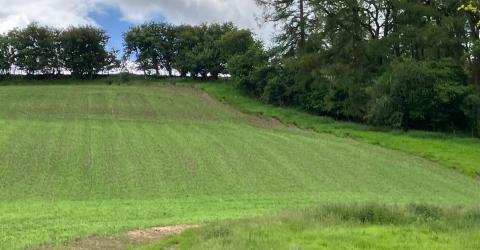
Figure 1: Pea and bean field on 10 June 2024

Figure 2: Pea and bean crop establishment 10 June 2024

Figure 3: Peas and beans growth by 5 August 2024

Figure 4: Pea and bean field at combining 18 September 2024