

03 March 2026
Multiple fields farmed in arable rotations in Wales have demonstrated higher soil organic matter (SOM) values compared to average laboratory values seen for arable land and have shed new light on some practices associated with cropping.
Twelve growers who mostly farm in Pembrokeshire and are members of a Farming Connect Arable Discussion Group took part in a study that examined the health status of their soils and how it linked to the way they farmed that land.
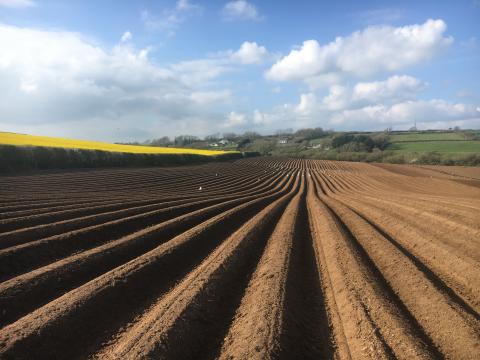
The research, which involved sampling eight fields on each of the 12 farms, produced a set of results that mostly counters general acceptance that arable crops deplete soil biology and nutrients.
The results in fact show that arable cropping mostly had more optimal pH and nutrient indices than grassland, and that intensive cropping practices didn’t automatically adversely impact soil biology.
There was also clear evidence in the analysis by Lancrop Laboratories that these elevations had likely resulted from beneficial active management practices such as incorporating chopped straw into soil and growing cover crops in the rotation, not from applying organic manures.
Dr Delana Davies, Farming Connect Cross Sector Manager, says that half the group’s SOM results were in the range of 4.2% - 6.3% - arable land samples received by the laboratory for UK and overseas soils are mainly in the 2-4% range.
Most of the farmers in the Farming Connect Arable Discussion Group don’t keep livestock and are reluctant to incorporate animal manure amendments to their arable fields – importing manure can introduce weed seeds such as black grass.
The results from the study overall have shown that the farmers are proving to be good custodians of their land, producing healthy and productive crops using management practices that support high levels of soil microbial biomass, Delana adds.
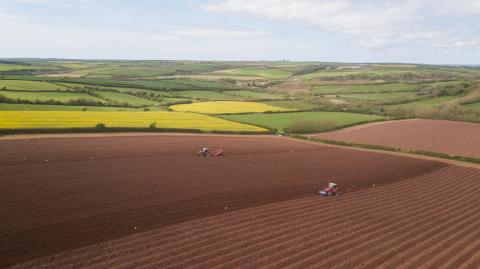
“What was surprising was that intensive management practices such as using high levels of nitrogen (N) fertiliser or growing potatoes were not automatically detrimental to soil health - these farmers are regularly monitoring and managing their soil health to provide the best outcome for efficient crop production.’’
The soil samples were taken in May 2025 and subjected to a Broad Spectrum Soil Health laboratory analysis.
As well as estimating soil microbial biomass by using the Solvita carbon dioxide burst, a Soil Health Assessment Score (SAS) is generated by an algorithm using the biological, chemical, and physical results, with each sample scored out of 100. This provides a method of benchmarking soil samples between fields and, over time, giving a platform to measure and monitor soil health.
While grass fields within these arable rotations had significantly higher microbial biomass - 4758 v 3622 mg/kg, those in arable production had a significantly higher SAS – an average of 82 compared to grassland at 74.
This is likely to arise from the close and regular attention to detail given to liming and nutrient management planning in arable rotations.
Scrutiny was also applied to how soil health was influenced by the time of year crops were established.
Winter-sown crops showed significantly higher microbial biomass levels than spring crops - 3713 v 3347 mg/kg - which suggests that winter sowing is likely to be associated with better climate resilience, resulting in improved crop outcomes under more extreme weather patterns.
How fields are cultivated was shown to impact on soil health too.
Over the last 10 years, there has been a move to minimum tillage practices using a one-pass cultivator rather than ploughing, reducing soil disturbance.
Fields with spring crops that were established with min till techniques had much higher microbial biomass than ploughed fields; in the winter-cropped fields ploughing was associated with slightly higher microbial biomass.
The results also confirmed why some fields under-performed; those that farmers perceived as ‘poorer performing’ had significantly lower microbial biomass and sub-optimal SAS scores.
Growing potatoes forms part of the rotation on several of the farms, grown in the same field for only one year in six.
The study showed no significant differences in fields that had grown potatoes in microbial biomass but where fields had grown potatoes three to five years previously, they had a significantly lower SAS score of 77 compared to 82 in soils where potatoes had never been grown.
Delana says this may be associated with the removal of large amounts of nutrients such as phosphate and potash by potatoes and demonstrates why precise nutrient planning is needed when establishing crops after potatoes in the field rotation.
In the study, N use was split into high and low, based on the average used for every crop. While use of high levels of N fertiliser is believed to harm soil health, this study showed it was in fact associated with significantly higher microbial biomass, 3737 v 3383 mg/kg.
Jon Telfer, of Lancrop Laboratories, suggests that this could be the result of higher N applications producing a more abundant crop canopy above ground, which stimulates photosynthesis; this is known to improve rooting capacity, generate more root exudates, and increased rhizosphere and soil biota below ground.
The evidence generated by the study supports the requirement to measure, manage, and monitor soil health for farm assurance schemes, and will conform with the requirements of the new Sustainable Farming Scheme to measure and monitor SOM, she adds.