

Llysiau Menai Project Update - Final
Reducing flea beetle damage in the production of high value brassica crops
Key results
- Mesh netting was the most effective method of protecting from flea beetle damage
- Companion planting is a viable option for control of flea beetle and can produce an additional crop for market
- Wildflower and biodiversity strips can effectively support pest management, but need to be well established before crop is planted
- Pak Choi and Chinese Cabbage were the most successful and versatile crops which suited both the grower and customer

Background
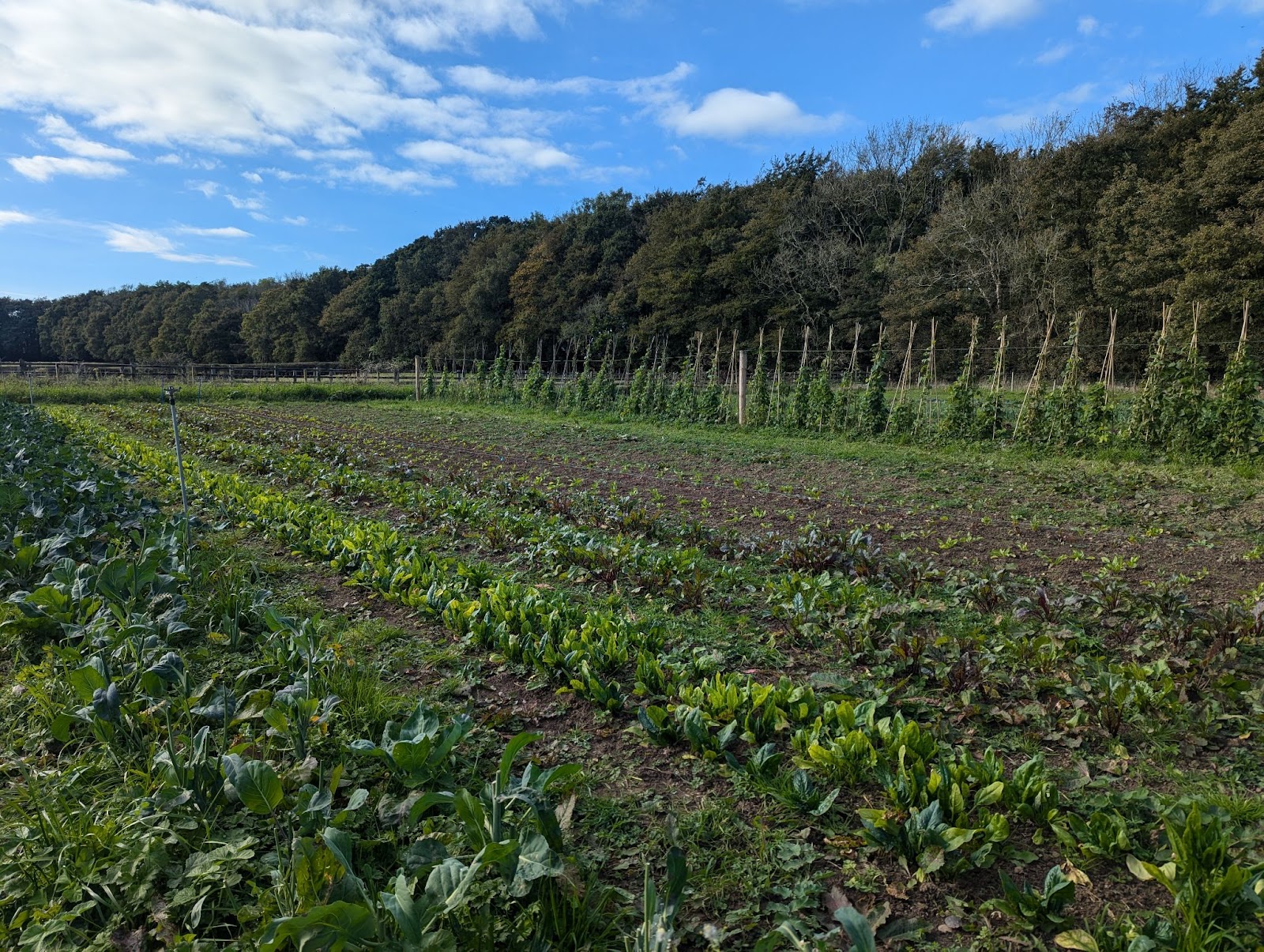
Llysiau Menai is a 1.5 acre market garden near Llanfairpwllgwyngyll in Anglesey, focusing on seasonal and local vegetable production. Although not certified organic, grower Sam Hollick practices agroecological methods, building soil health and supporting biodiversity to provide fresh produce for the local community through a veg box scheme.
The farm successfully produced brassica crops in its first season and wanted to improve and up scale production, identifying new varieties that would suit the chosen market.
A challenge in producing brassica crops is prevention of and protection from flea beetle.The pest predominantly targets brassica crops, damaging leaves and sometimes roots of plants. The damaged leaves can make the crop unsuitable for market and therefore a management plan needs to be put in place. This can include chemical, biological and/ or cultural control methods. Llysiau Menai opted to trial agroecological methods including companion planting, trap crops, biodiversity strips and horticulture mesh.
Purpose of the work
- To trial agroecological methods to reduce flea beetle on brassica crops at market garden scale including companion planting, agricultural mesh, mustard trap crops and wildflower strips
- To trial a range of brassica crops to increase diversity in products on offer to customer
Trial details
Area
The trial covered 250m2 of the 1.5 acre site with 30m long beds. In 4 blocks.
Ground preparation
The soil was cultivated using a rotovator and a stale seed bed created prior to initial plantings. A pass with the rotovator between plantings was used to reduce weeds.
Varieties used in trial
Chinese Cabbage : Questar, Enduro, Michihili, Kaboko
Pak Choi: Goku, Joi Choi, Prize Choi. Shanghai Green, Dwarf Canton White, Santoh Yellow
Other tender brassicas: Komatsuna, Komatsuna Shonganyan, Texsel Greens, Namenia, Calabrese Belstar, Calabrese Covina, Kailaan
Companion crops: Dill, Spring onions, Catnip, Mustard Green Giant
Wild flower mix: Marigold Spanish Brocade, Yarrow, Corn Chamomile, Cornflower, Red clover, Buckwheat
Sowing and Planting
An initial sowing took place in the polytunnel to trial an early crop before the emergence of flea beetle
The first main crop was planted alongside a companion plant, with treatments along the length of the bed:
Block 1: Crop interplanted with catnip
Block 2: Crop interplanted with spring onions (fig. 1)
Block 3: Crop planted with mustard trap crop adjacent in the bed
Block 4: Crop planted with wild flower mix in adjacent bed
The two subsequent plantings were covered in anti-beetle horticultural mesh.

Fig 1. Crop interplanted with spring onions
External factors influencing the trial
Weather – generally a cool, damp year. Not ideal growing conditions for crops and it potentially reduced the presence of flea beetles who prefer warm, dry conditions.
New land – this was the growers second season on this site and soil conditions are still being improved. The soil is low in P and K and there is grass present in the weed burden. Poor nutrition might have contributed to limited yields and some losses were a result of weed control challenges.
Pests – Due to the cool, damp climate, slugs were a major issue causing damage to some of the sowings and plantings..
Outcomes of the trial:
- Crops with companion planting treatments had noticeable cosmetic damage, to a level that could impact saleability depending on the market.
- No clear difference in flea beetle damage was observed between the two different interplanting options (catnip and spring onions), but both were better than the block planting adjacent to the mustard trap crop. As the growers main market is direct to consumer, the level of damage was acceptable in the interplanted treatments but not the block planted treatment.
- Companion planting with spring onions can minimise damage on the best varieties, but the presence of predator promoting flowers nearby is potentially more effective.
- Dill didn’t develop successfully as modules so was abandoned for companion planting
- After the wild flower mix started flowering, it appeared to reduce the flea beetle pressure. The level of damage on new growth post flowering was significantly less.
- Komatsuna is more suited to repeated harvest of outer leaves (it was included in a ‘stir fry greens’ product). Initial observations showed it was too damaged by flea beetle to be used, however the regrowth was virtually free of holes.
- Anti-beetle mesh was reasonably successful. Observations at uncovering indicated virtually no flea beetle damage (less than 10 holes per leaf sampled). Flea beetles were observed present on the crop at sampling, presumed present on previous planting and migrated in when uncovering.
- 1-2 weeks after removing the mesh, sampling showed minimal flea beetle damage on all varieties except Kaboko and Prize Choi – to a level still cosmetically acceptable for the market, especially when removing outer leaves.
- The greenhouse effect of the mesh on sunny days may have contributed to bolting of some varieties.This could potentially be managed with irrigation.
- The mustard trap crop was largely ineffective, but did provide an unexpected product sold to a local chef
- High slug pressure wiped out early and late plantings. Those plantings that did well had multiple cultivations ahead of planting which reduced slug populations.
- Anti flea beetle mesh can virtually eliminate flea beetle damage, but attention needs to be paid to temperatures and shading.
Feedback on varieties and recommendations for next season
- Outdoor grown tender leafy brassicas (pak choi, Chinese cabbage, komatsuna) provide an interesting variety in the supply of leafy greens for a veg box scheme.
- Even though the weather was unusually cool and wet, this was favourable for pak choi and Chinese Cabbage and therefore produced a good crop. Next season the grower will plant one succession outdoors, followed by a polytunnel succession to provide crops late summer/ early autumn. This will provide more interest and variety for the box scheme.
- Calabrese need planting out in warmer conditions than were present in the early season if they are to grow ahead of the slugs. Plenty of water is needed when the crop is developing.
- Komatsuna is a delicious crop and the grower will develop the sowing timings next season to provide an alternative leafy green crop. It will be trialled alongside early kales and again in late summer to produce ahead of autumn/winter kales.
- Pak choi develop quicker than Chinese cabbage, which are more at risk from slug damage. Next season the grower plans on interplanting these crops and growing under mesh. The mesh can be removed for pak choi harvest, leaving space to weed and reduce slug population for Chinese cabbage to develop.