

Red clover - the key in moving towards protein self- sufficiency? - Lamb performance report
Key results:
- Superior finishing rate: Red clover (RC) achieved the fastest finishing, with only 22% of lambs remaining on farm by 29 October, compared to 42% for White Clover (WC) and 81% for Permanent Pasture (PP).
- Compensatory growth: Lambs on RC showed a slow start (27g/day) but accelerated dramatically to 217g/day after a two-week acclimatisation period.
- Initial performance: White clover swards supported the fastest initial growth rates while RC lambs were adjusting to the new diet.
- Reduced days to slaughter: The project confirmed that RC significantly reduces days to slaughter compared to conventional pasture.
Background:
The benefits of grazing red clover for finishing lambs —including reduced nitrogen use, improved soil fertility, and faster lamb growth—are well documented. To validate these benefits specifically for Awel y Grug, a trial was established in autumn 2025. This project compares the performance of lambs finishing on three specific sward types: Red Clover (Red Clover, Perennial Ryegrass and Hybrid Ryegrass), White Clover (White Clover and Perennial Ryegrass), and Permanent Pasture. The aim is to provide a complete picture of how clover-rich swards can replace concentrates and improve forage quality in a lamb finishing system.
Purpose of the work:
- To compare the efficacy of red clover, white clover, and permanent pasture swards for finishing store lambs.
- To quantify the impact of sward type on daily liveweight gain (DLWG) and time to slaughter.
- To demonstrate the practical benefits of high-protein, low-degradability forage in reducing reliance on inputs.
What we did:
Lambs were randomised by sex and liveweight (average start weight ~32.5kg) into three groups. Only lambs 27kg or heavier were included in the analysis. The grazing platform was divided into 0.5ha paddocks: 9 for PP, 8 for RC, and 6 for WC. The trial commenced on 26 September and ran until 5 November 2025. Lambs were weighed on 10 October, with selection for sale occurring on 19, 25 and 29 October. Rotation lengths varied based on sward availability and demand, and residuals were kept constant at 1750kg DM/ha.
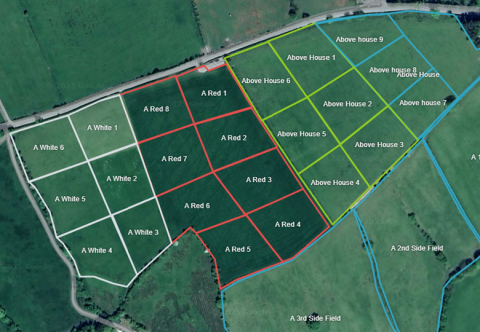
Table 1: Initial lamb numbers and average weights by sex. Weight range showing lightest and heaviest lambs in each group
| Male | Female | Unknown sex | Weight range (kg) | |||
No. | Ave wt (kg) | No. | Ave wt (kg) | No. | Ave wt (kg) | ||
PP | 70 | 32.54 | 15 | 31.73 | 1 | 36.00 | 27 – 41.5 |
RC | 63 | 32.99 | 12 | 32.25 | 3 | 31.67 | 27 – 43.0 |
WC | 62 | 32.87 | 12 | 30.46 | 2 | 33.75 | 27 – 44.0 |
Outcomes:
- Acclimatisation challenge: Lambs on RC were initially reluctant to graze, resulting in a low growth rate of 27g/day during the first two weeks. In contrast, lambs on WC grew fastest during this initial period.
- Rapid acceleration: Once acclimatised, RC lambs demonstrated significant compensatory growth. Between 10 - 19 October, their growth surged to 217g/day.
- Sales and finishing: The accelerated growth on RC led to rapid finishing. By the weighing on 29 October, only 22% of the RC group remained on the farm. In comparison, the PP group struggled to finish, with 81% of lambs remaining.
- Lamb growth trends:
- PP: Consistent but slow growth (avg ~66-79g/day depending on period).
- WC: Strong steady performance (avg ~125-158g/day), finishing 58% of lambs by late October.
- RC: Slow start followed by explosive growth (peaking at >200g/day), proving most effective for speed of slaughter.
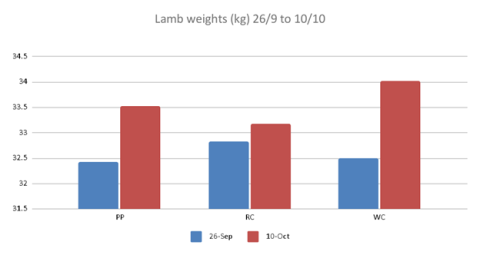
Figure 1: Lamb weight averages for each group over the initial 2 weeks. Weigh dates 14 days apart.
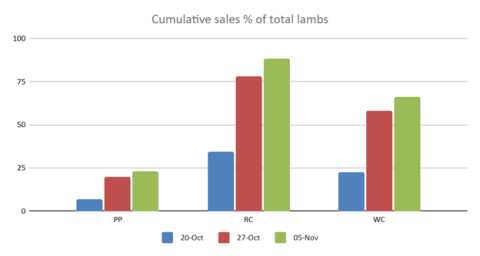
Figure 2: Cumulative lamb sales. Graph showing the rate of lamb finishing for all lambs in the trial.
How to apply on your farm:
- Establish red clover leys: Integrate red clover into dual purpose leys, for producing high quality silage and grazing for finishing stock.
- Plan for acclimatisation: Allow for a 2-week "lag phase" where lambs adjust to the sward. Ensure the clover does not become too mature and stemmy, as this significantly increases the time required for lambs to acclimatise.
- Select heavier lambs: Red clover leys are best for heavier lambs that can capitalise on the high protein for a final finishing sprint.
- Rotational grazing: Subdivide fields (e.g. 6-8 paddocks) to manage residuals, prevent selective grazing, and protect the longevity of the red clover.
- Monitor weight: Weigh regularly (fortnightly) to catch the compensatory growth surge and draft lambs promptly as they hit target spec.
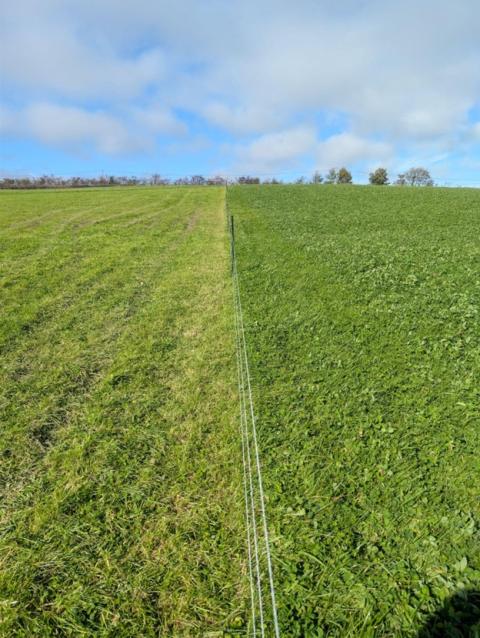
Figure 3. Photograph taken on 6 October 2025, looking up the fence separating the white clover plot (grazed) on the left and the red clover plot (un-grazed) on the right.