

Our Farms Project Final Update
Key results:
- Clover cover increased significantly only between May and October 2025. Crucially, some areas hit 70% cover content.
- AberLasting recorded the greatest stolon density (m/m2) in both trial fields, suggesting superior horizontal growth and potentially greater persistence compared to the standard blend.
Background:
This project investigates white clover, a legume that offers a route to potential savings on the major input cost of Nitrogen fertiliser on a grassland farm. With nitrogen-fixing bacteria contained in root nodules, atmospheric nitrogen is captured and converted into a plant-usable form, which can potentially replace up to 150 kg/ha of synthetic fertiliser. White clover also boasts the highest digestibility of common grassland plants together with a high crude protein content, resulting in increased quality pastures for grazing animals.
Purpose of the work:
- Improving nitrogen use efficiency by increasing white clover content of grass swards
- Compare the establishment and performance of different white clover varieties
- Evaluate the practicality of overseeding as an establishment method
What we did:
The trial was conducted in two grassland fields (Cae Ysgol and Cae Bargoed), direct drilled in early June 2024. A split-plot design was used to compare two clover treatments against a control:
- Treatment 1: Standard white clover blend.
- Treatment 2: New hybrid clover producing both stolon and underground rhizomes.
- Control: An adjacent strip in each field left untreated (no clover drilled).
Both clover varieties were overseeded at a rate of 2kg/acre using an Erth Agriseeder drill (Figure 1).
To optimise clover establishment and minimise grass competition, the following steps were taken:
- Pre-drilling management: Both fields were cut for silage immediately prior to drilling to reduce existing sward height and biomass.
- Drilling: Clover was drilled in a single pass in conjunction with the application of slug pellets to mitigate pest pressure.
- Post-drilling management: Fields were grazed shortly after drilling. The grazing round was temporarily shortened to approximately 20 days to suppress grass growth and further reduce competition against the emerging clover seedlings.
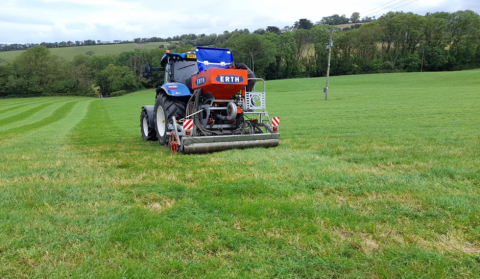
Figure 1: Erth Agriseeder drill
Ground cover assessment: Clover establishment success was quantified by assessing the percentage of white clover ground cover area within representative quadrat areas. These areas were photographed for digital analysis.
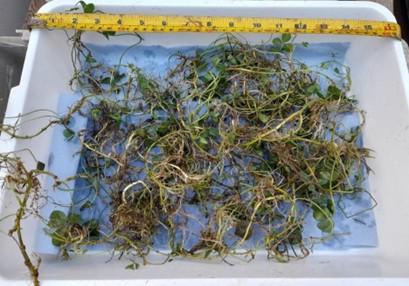
Morphological assessment: Intact turves were removed from both Cae Ysgol and Cae Bargoed. These samples were processed to measure stolon lengths and to visually confirm the presence of rhizomes specifically in the hybrid clover variety (Figure 2).
1. Clover establishment and cover
The clover plants demonstrated a significant increase in ground cover during the 2025 growing season, but establishment remained highly variable across the plots.
- Establishment period: Clover plants required a 12-month period from sowing to reach full development, rendering them highly vulnerable to damage and competition during this period.
- Rate of increase: Clover cover increased significantly between May 2025 assessment (Figure 3, when levels were only 8-12%) and October 2025 assessment (Figure 4), indicating successful late-season growth.
- Treatment comparison: The AberLasting hybrid clover showed a slightly higher average clover content in both fields compared to the standard blend, though this difference was not statistically significant
- Variability: The sward remained highly variable.
- Sward areas with high grass covers (often near urine/dung patches) frequently showed very few clover plants.
- While several quadrats recorded over 70% visual clover cover, over one quarter of the quadrats in the sown areas recorded less than 5% cover.
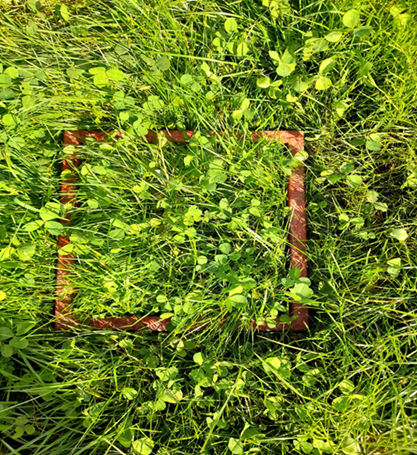
Figure 3. May 2025 Visual clover plant count
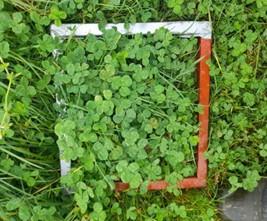
Figure 4. October 2025 Visual clover plant count
- Stolon and rhizome assessment
Morphological assessment focused on stolon development and verifying the presence of rhizomes in the hybrid variety.
- Rhizome structure: There was no evidence of any distinct rhizome structures in the AberLasting hybrid clover turves, despite this being a key feature of its description.
- Stolon density (Table 1): AberLasting recorded the greatest stolon density (m/m2) in both Cae Ysgol and Cae Bargoed, suggesting superior horizontal growth and potentially greater persistence compared to the standard blend.
Table 1. Stolon densities
Stolon density (m/m2) | ||
AberDairy | AberLasting | |
| Cae Ysgol | 18 | 23.5 |
| Cae Bargoed | 29 | 38 |
How to apply on your farm:
- Ensure the existing sward is heavily grazed or cut immediately before overseeding. For the critical first 12 months, adopt a shortened, rotational grazing schedule (e.g., around 20 days rotation) to suppress grass and allow light to reach the developing clover plants.
- Do not expect uniform results across the field. Focus management efforts on achieving good overall establishment rather than perfection.
- Do not skimp on seed or pest control. A 2kg/acre rate should be considered the minimum standard when overseeding into a competitive sward, and slug pellets must be applied during drilling, especially in damp conditions and high-risk periods.
- Do not assess the success or failure of the stand in the first few months. The most impactful changes in N-fixation, protein content, and grazing benefit will only be realised in the second full growing season. Management patience for the first year is critical.