

Final Update: Investigation into the use of a seaweed-based biological input on grassland
Key results:
- Reducing fertiliser by 30% in combination with two Câr-y-Môr applications achieved the optimal nutrient balance
- The hot, dry weather and grazing may have impacted the results, with the consistency observed in the 30% reduction treatment suggesting that CYM may enhance root function or calcium uptake under stress, mitigating weather-related impacts more effectively
Background
Dylan Roberts participated in a trial using the Câr-y-Môr (CYM) seaweed-based Bio-stimulant, working in conjunction with Farming Connect, WWF and Will Marris, Terrafarmer. The use of seaweed based bioproducts has been gaining momentum in crop production systems owing to their content of bioactive components that have phytostimulatory properties, promoting increased plant growth and yields.
Purpose of the work
Determine if biological inputs may help reduce fertiliser requirements without impacting yield whilst improving soil health parameters, such as soil biology and organic matter.
What was done
The trial began in late April 2025 and consisted of four plots in a grass field intended for grazing but due to the dry weather silage cuts were also taken:
- Control (A) Standard farm practice (SFP)
- Treatment (B) No Fertiliser
- Treatment (C) 50% fertiliser reduction
- Treatment (D) 30% fertiliser reduction
All three trial plots received two 7.5L/ha applications of liquid bio-stimulant over the trial period.
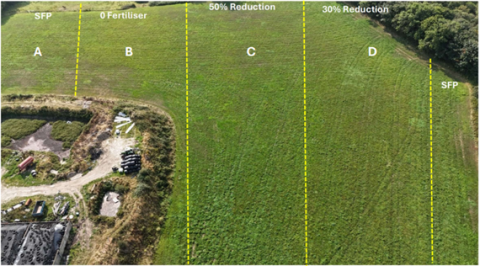
Figure 0. Trial plots at Llwyngwair Farm
Each plot was GPS-tagged to ensure repeatable sampling, which over the season included assessments of soil structure, soil biology, crop yield and nutritional value through:
- Soil analyses (BSE Solvita tests)
- Visual Evaluation of Soil Structure (VESS)
- Leaf and feed value analyses
- Quadrat-based yield assessments
Outcomes
Leaf Nitrogen Sample Results
Leaf nitrogen is a useful tool to assess nitrogen use efficiency and understand the impact nitrogen rates and biological products have on crop growth and health.
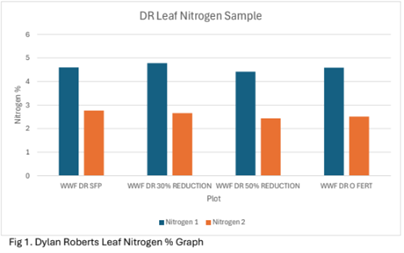
Results indicate that reduced fertiliser rates were associated with a reduced leaf Mg level. However, this could also be due to the prolonged dry and warm weather as Mg is one of the first elements to become deficient under dry conditions.
Forage sample results
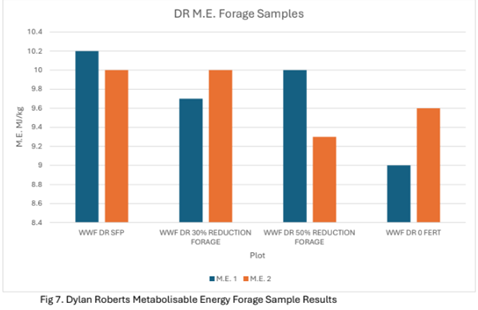
The SFP plot has produced the highest overall average ME which shows the current fertiliser strategy is working well and CYM is helping to maintain ME levels. These results are encouraging as they can give farmers confidence that reducing fertiliser rates by 30% and 2 applications of CYM can maintain forage quality and output. The 30% reduced fertiliser plot has on average produced similar results to the SFP plots.
Forage sugar sample results
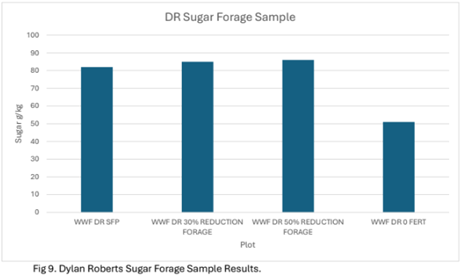
All the plots where fertiliser was applied had results above 80g/kg so had good levels of sugar for grazing or preserving. There is a dramatic drop in sugar content of 33g/kg in the zero-fertiliser plot.
Overall Crude Proteins increased from sample 1 to sample 2, despite the fertiliser reduction. The only slight reduction was in the 30% fertiliser reduction plot, but this was a reduction from a high start of 158 and only dropped to 151. This shows that CYM is helping to produce good quality forage with good levels of crude protein. The 30% fertiliser reduction plot has again produced the most consistent results.
Baseline soil sample results
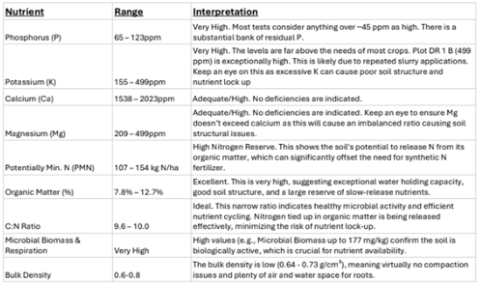
The soil samples from the trial fields indicated that the soils are in very good health based on key soil health indicators such as organic matter, bulk density, microbial biomass and nutrient status.
Below is a table summarising the findings
How to apply on your farm
- Assessing soil health baseline at the outset is a must.
- Assuming soil health is good a 10 - 20% reduction in fertiliser application would provide a good base to start with.
- In season soil testing post initial bio-stimulant application to check against the initial baseline test to check soil functionality.
- Try out on a small plot to begin with to assess the effectiveness before proceeding to a larger plot to trial.
Please contact timtechnegolcff@menterabusnes.co.uk if you would like to receive a copy of the full final report for this project.