

26 October 2018
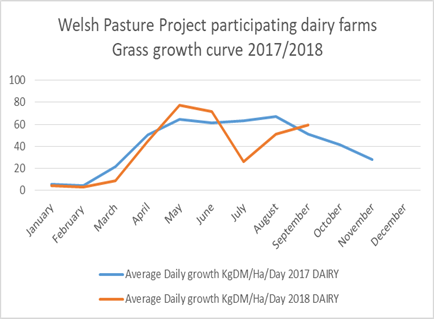
As we head into the autumn and although grass growth recovered well during September with the welcome spells of heavy rain, unfortunately starting covers in certain parts of Wales have been too low for any meaningful resurrection of the 2018 grass growing season. Many farmers have been busy grazing off this valuable re-growth to help put the brakes on the large amounts of silage and concentrate that has been fed throughout July and August. The sudden return to lush ‘spring like’ grass will also have caught a few cattle farmers out with issues such as grass-staggers and even bloat.
The average farm covers on many farms especially in the east is well below that of last year, but a silver lining for 2018 is the fact drier than normal ground conditions in October still allow for stock to be kept out comfortably. There is a risk that cows who have been heavily buffered or are still being so will have become lazy and wont graze down to adequate residuals which is not being helped through rejection patches caused by dried out dung pats from the hot dry summer.
Lighter and lower productive livestock classes should be utilised to graze these areas tightly if possible well into November as to reduce the burden on any forage stocks. Farmers should also take the opportunity to carry out some targeted remedial field work such as lime application and sward repairs to damage carried over from the wet Spring.
To add to all the important decision making above we must be reminded that planning for turnout 2019 also begins during the Autumn period. Combined with low silage stocks, it could be easy to fall into the trap of scalping your farm during these favourable grazing conditions ahead of a potential cold Winter. Therefore planning when and where the last round of grazing begins will protect your grass wedge for the spring, this could also be achieved by drying off, culling or selling stock according to back end grass growth. Finally by looking at the average monthly grass growth curves for 2017/2018 in the graph above, gives a clear indication of the extremes and random conditions facing grassland managers that now seems to be just normal.